The direct answer
Buy a stock 3D animal model when its appearance, movement capabilities, licence and technical setup already suit your production. Adapt an existing asset when the changes are limited and testable. Commission a custom animal when individual likeness, distinctive character design, close-up performance or demanding delivery requirements would otherwise require substantial rebuilding. Compare the work needed to reach an approved shot or playable character, not just the purchase price.
A convincing marketplace preview is a useful starting point, but it does not show whether the animal will work in your scene. A distant deer, a talking campaign rabbit and a digital double of a particular dog ask different things of a model. The right decision depends on what audiences will actually see and what your team must be able to change.
This guide is for producers, creative teams and developers deciding whether to buy, adapt or commission an animal asset. The animal photographs illustrate reference and evaluation criteria; they are not examples of 3D models produced by Mimic. The project examples identify the published contributions of Mimic Productions rather than claiming responsibility for an entire production.
Table of Contents
Define the animal's job before choosing a model
Start with the closest camera distance, the required actions and the intended output. An animal that crosses the background for two seconds may need a reliable silhouette and walk cycle. The same species filling the frame needs much closer scrutiny of the eyes, mouth, coat and deformation. A model suitable for one use is not automatically suitable for the other.
Write down the few requirements that cannot change: species or breed, distinctive markings, art direction, interaction with people or props, and whether the asset must work in a game engine. Separate these from preferences that can be adjusted. This prevents a team from buying an attractive asset and only later discovering that the story depends on something it cannot do.
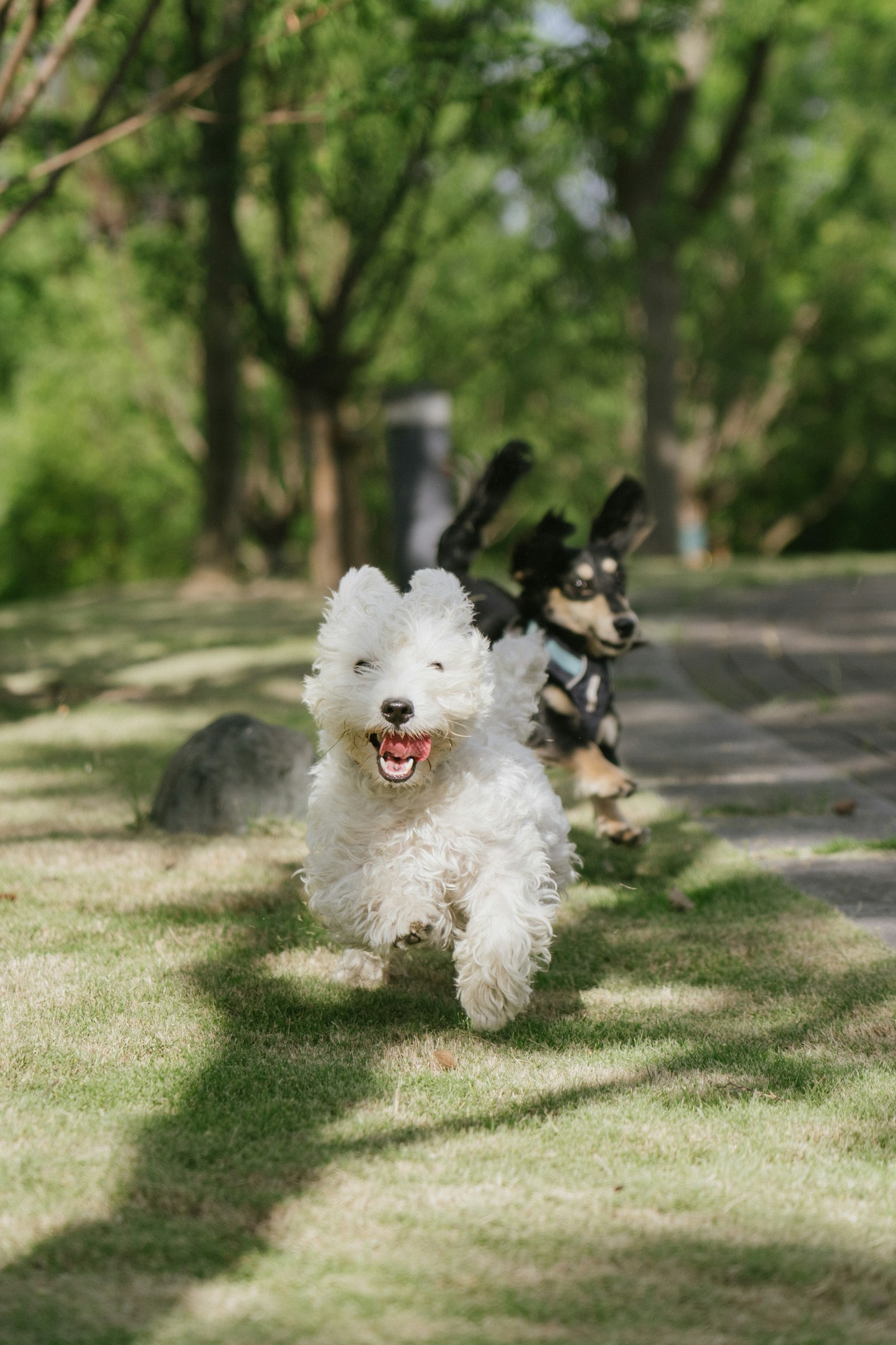
The two dogs in this reference photograph illustrate why species alone is an incomplete specification. Proportions, coat structure and silhouette differ substantially. If those differences matter to your character, include them in the selection criteria rather than assuming a texture swap will solve them. Our production brief guide helps turn those observations into a brief a supplier can evaluate.
When a stock animal model makes sense
Stock assets can be a sensible choice for prototypes, background animals, short-lived visualisations or productions with flexible designs. They can also serve final work when their quality, licence and capabilities match the actual requirements. Custom production is not automatically the better answer, and purchasing an asset should not be treated as a compromise before it has been tested.
Look beyond the rendered thumbnail. Ask what is supplied: editable geometry, texture maps, a working rig, animation clips, groom data and the relevant source files. Check software versions, required plugins, scene units and whether the advertised appearance depends on a renderer you do not use. A file that imports successfully may still need material reconstruction or rig work.
Choose stock when the important tests pass without extensive modification. For example, a background herd might tolerate a shared base model with controlled variations. A prototype might need only enough fidelity to assess scale and movement. Record any limitations so that a temporary asset does not silently become a final asset with expectations it was never selected to meet.
When adapting an existing asset is the middle option
Adaptation works best when the asset is fundamentally suitable and the changes are bounded. Adjusting markings, making modest proportion changes or preparing additional levels of detail may be more practical than starting over. Ask the artist who will perform the work to inspect the files before committing to a schedule. A small visual change can have consequences for the rig, skin weights or groom.
Define an adaptation stop point. If the animal needs new topology, a replacement skeleton, rebuilt textures and a new groom, the purchased model may be contributing little beyond reference. Compare a scoped adaptation estimate with a scoped custom estimate using the same acceptance criteria. Avoid comparing the stock purchase alone against the complete cost of a commissioned asset.
Creature modelling should be evaluated against the final camera and deformation requirements, whether the starting point is an existing mesh or a new design. Ask which components can be retained, which must be replaced and what cannot be determined until a production test. That uncertainty belongs in the plan before approval, not in the final delivery discussion.
Choose custom design when the character must be distinctive
A brand character often needs more than a recognisable species. It may require a specific face, readable gestures, unusual proportions or a silhouette that remains consistent across campaigns. Starting from a generic animal can restrict those decisions. Custom design allows the visual identity and the performance requirements to be developed together, although the required usage rights still need to be agreed in the contract.
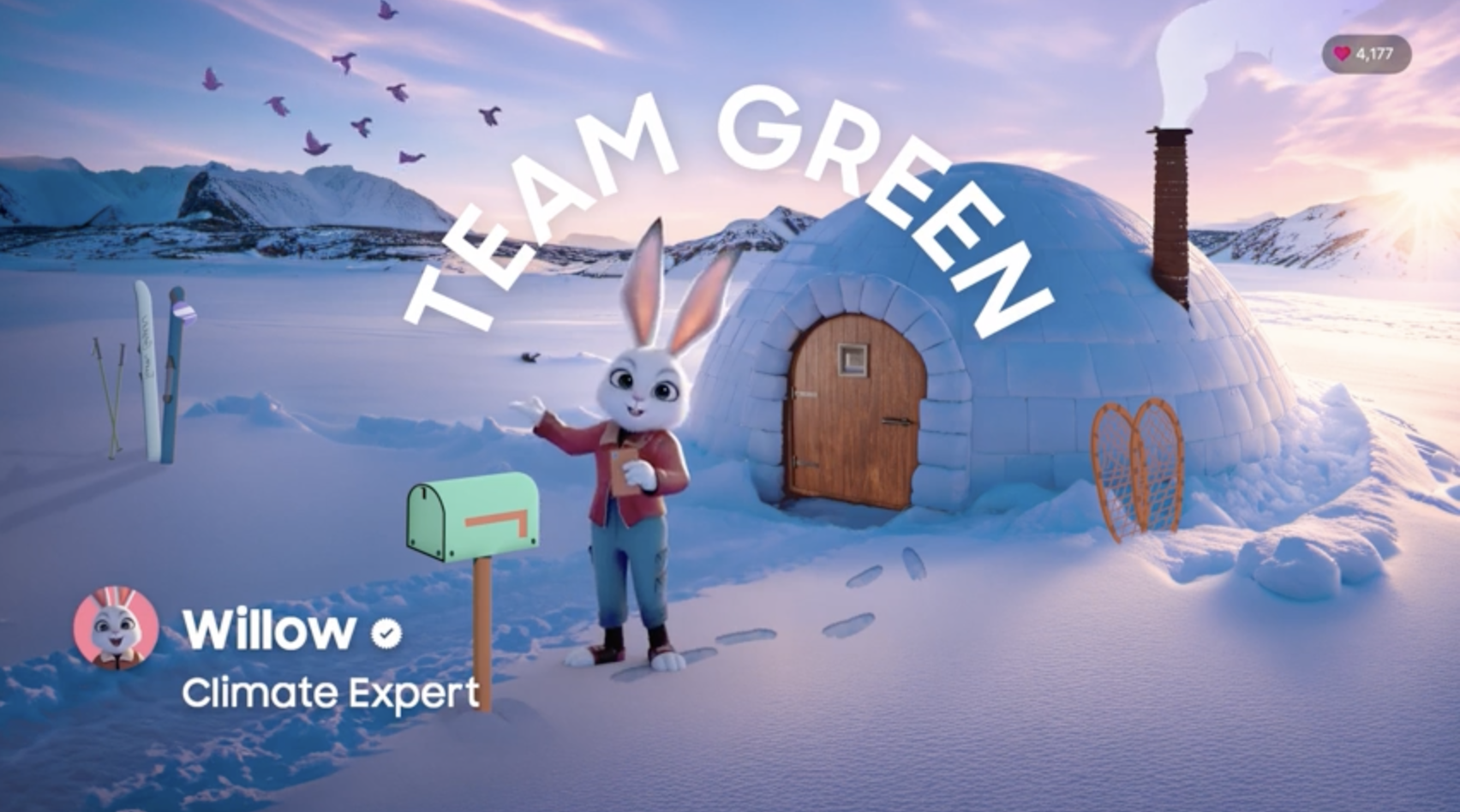
The Samsung Willow project offers a relevant example of a designed animal character. Mimic Productions' published project account describes work with Kingdom of Something on character creation, 3D modelling, grooming, keyframe animation, look development and rendering. The rabbit's human-like gestures are part of the character requirement, rather than simply a realistic rabbit performing a standard animal cycle.
This example does not mean every mascot needs the same production scope. It shows why a buyer should specify expression, gesture and product interaction before selecting an asset. If the character must point, hold an object or communicate an emotion in close-up, request a test of that behaviour. A beautiful neutral pose cannot demonstrate those capabilities on its own.
Choose a digital double when individual likeness matters
A digital animal double has a different acceptance target from a generic animal. The audience may need to recognise a particular performer through its proportions, markings and facial features. The brief should identify which characteristics must match, what reference is available and how the digital animal will be compared with the real one. Scanning is a possible input, not a substitute for production preparation.
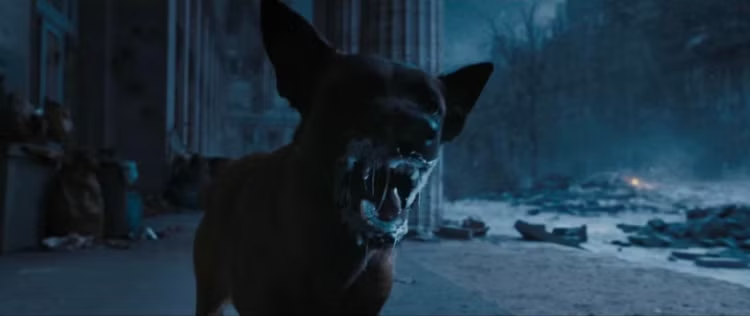
For The Hunger Games: The Ballad of Songbirds & Snakes, Mimic Productions identifies work involving canine performer Demeter from Filmservice Babelsberg. Its published contribution includes scanning, mesh cleanup, modelling, texturing and blendshape modelling. These are specific asset-production responsibilities; they should not be interpreted as a claim that Mimic delivered every creature effect or animation in the film.
If your production requires this kind of continuity, discuss digital animal doubles before buying a near-match. A stock dog may be suitable for a generic background role but unsuitable for matching a particular performer in a close shot. Establish reference access, required viewpoints and approval responsibility early, especially when the digital asset must intercut with photographed footage.
Test the rig against the movement you actually need
The label “rigged” does not tell you whether a model supports your required performance. Inspect shoulder and hip motion, paw contact, neck turns, jaw opening and any facial controls the scene needs. Test poses at the limits of the planned action. Watch for collapsing volume, sliding feet and skin or fur intersections that are hidden in a neutral preview.
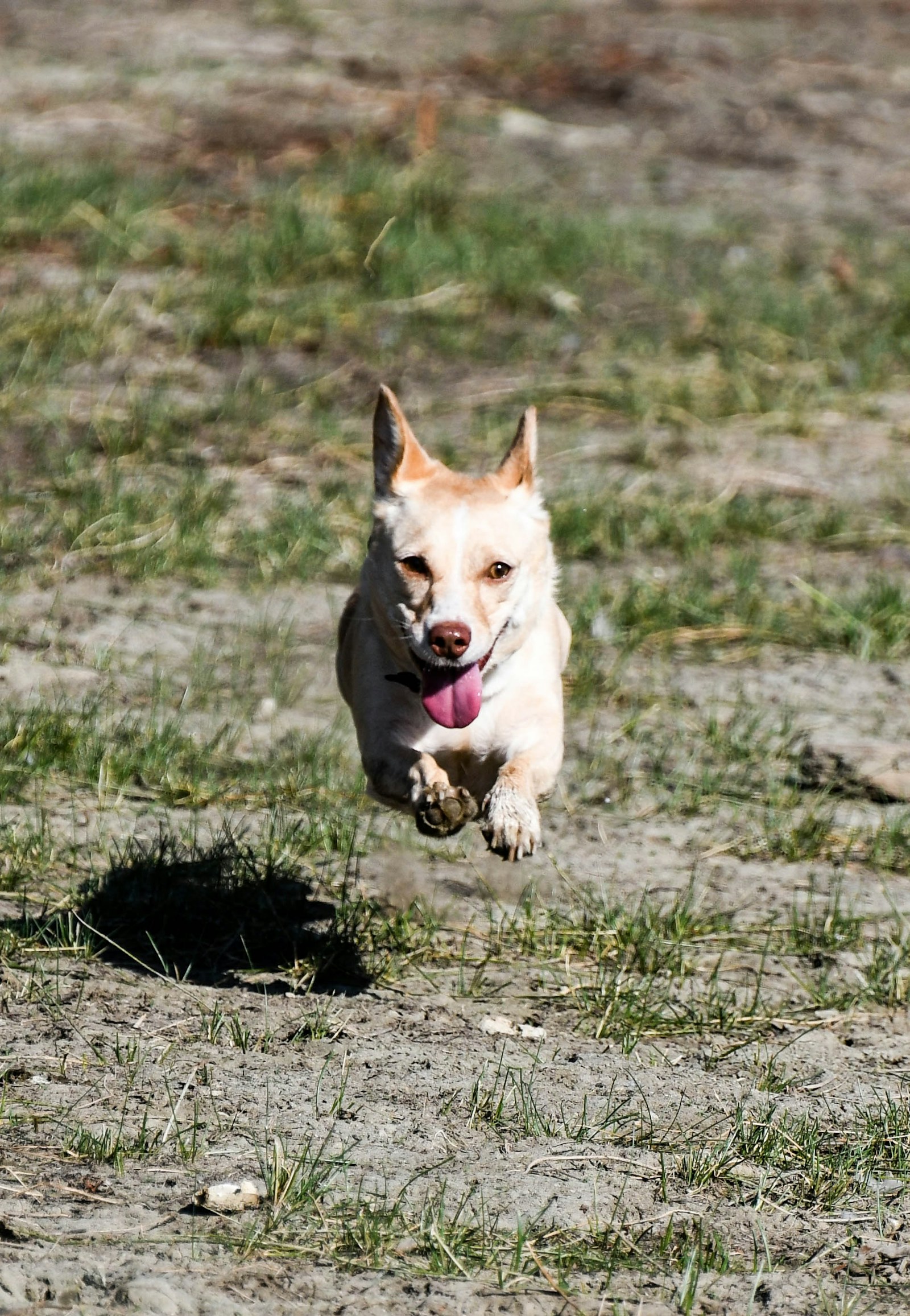
This running-dog photograph is a reference for the kind of compressed, airborne pose that a movement test may need to include. A still image cannot establish timing or gait, so use suitable motion reference as well. Ask for the animal to perform the actual action family rather than relying on an unrelated demonstration clip supplied with the asset.
Animation transfer also requires inspection. Different proportions, skeleton hierarchies and control conventions can make existing clips unsuitable without adjustment. Epic's IK Rig retargeting documentation explains tools for transferring animation between characters; it does not remove the need to evaluate the resulting motion. Retargeting should be tested on the intended animal and its contact requirements.
For commissioned or adapted assets, scope creature rigging and animation around these tests. For interactive work, agree the responsibilities described in the game creature design and animation service, including asset behaviour in the target project. A render of an animation is not evidence that the delivered files will integrate cleanly into your gameplay setup.
Evaluate fur and materials in the intended scene
Coat appearance can change dramatically with lighting, distance and the representation used. Ask whether the asset includes strand-based grooming, hair cards, textured geometry or a combination. Confirm what is editable and what must be recreated when moving between tools. Do not assume a still rendered with one setup represents the appearance or performance available in another.
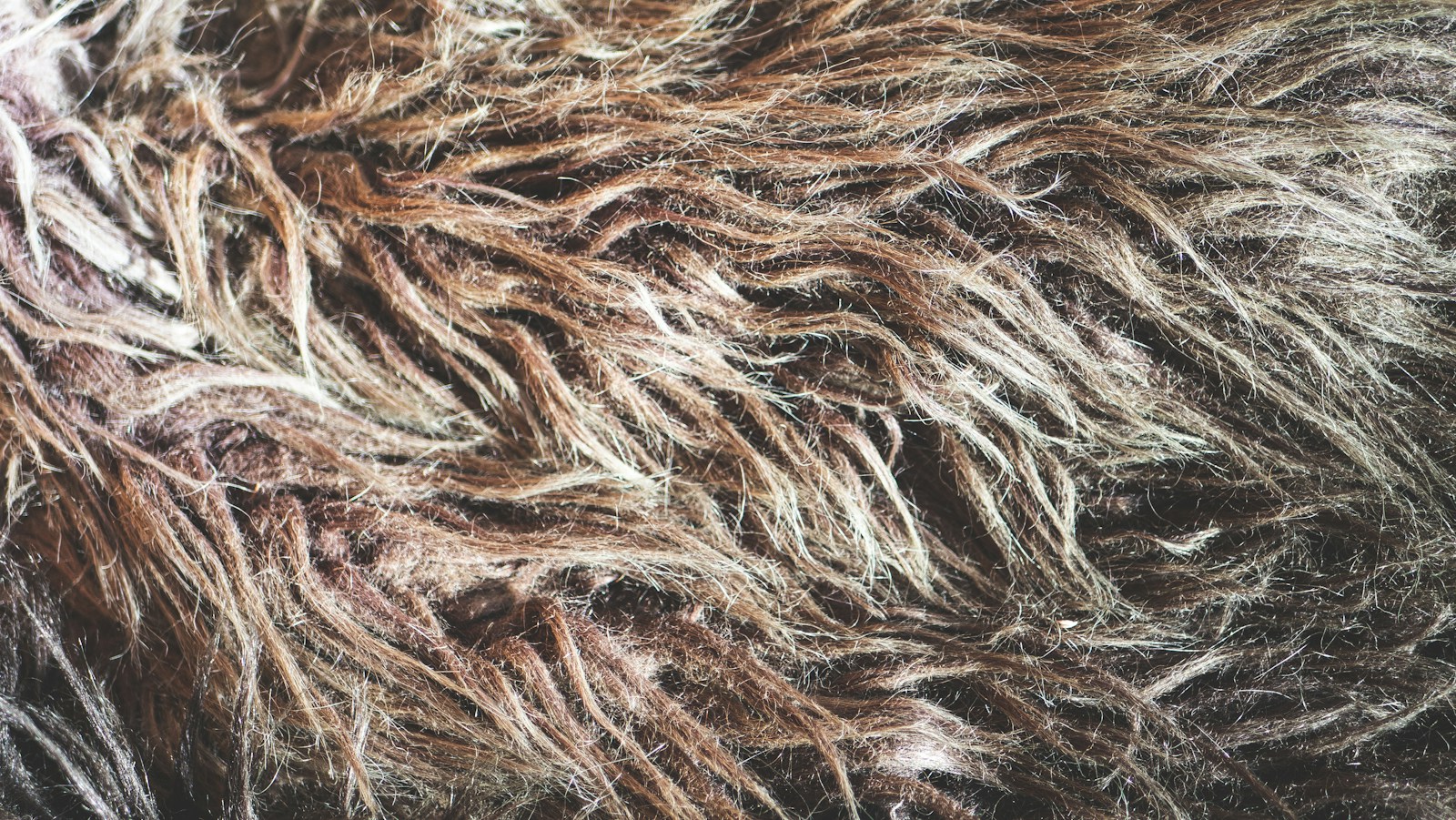
The close-up reference above shows variation in hair direction, length and colour. Those details can matter in a close shot, while a distant animal may need a simpler treatment. The purpose of reference is to decide which features must survive at the final viewing distance, not to reproduce every strand regardless of how the animal will be used.
Test the coat under representative lighting and movement. Check the silhouette, exposed skin, intersections and transitions between detail levels where relevant. For real-time work, measure the asset in the target scene on the agreed hardware rather than judging it in isolation. Our creature grooming and fur service can be scoped around the required appearance, delivery format and performance constraints.
Compare the complete delivery and usage terms
Build the comparison around the same finished result. Include purchase or creation, adaptation, rigging, grooming, integration, testing and agreed revisions. A cheaper starting asset may remain the best option, but only if the remaining work is understood. Equally, a custom asset can be excessive for a limited background role. The useful question is which route reaches the required result with manageable uncertainty.
Read the licence or agreement for the exact proposed use. Check whether modification, commercial distribution, client delivery and use across projects are covered, and how source files may be shared. Clarify any restrictions on redistribution of the underlying asset. Do not assume that purchasing a model or commissioning new work automatically grants exclusivity or unrestricted ownership of every component.
Keep a record of third-party dependencies, source versions and usage terms with the delivery. Ask who will resolve missing textures, unsupported plugins or broken file paths after handoff. These practical details matter when another team must open the project months later. If a licensing point is unclear, resolve it with the rights holder before relying on the asset in production.
Make the decision with a representative production test
Choose one demanding but representative action or shot. Use the intended camera distance, a meaningful pose and the delivery environment. Agree what constitutes acceptance: recognisable likeness, acceptable deformation, the required coat appearance and successful integration. A small test is useful only when it examines the requirements most likely to change the buy-versus-build decision.
After the test, choose one of three outcomes: retain the stock asset, approve a defined adaptation scope, or commission a custom replacement. Record the reasons and unresolved dependencies. This gives the producer a defensible decision and gives the artists a shared target. It also avoids repeatedly revisiting an asset purchase each time a new limitation appears.
Stock and Custom 3D Animal Model FAQs
A convincing marketplace preview is a useful starting point, but it does not show whether the animal will work in your scene. A distant deer, a talking campaign rabbit and a digital double of a particular dog ask different things of a model. The right decision depends on what audiences will actually see and what your team must be able to change.
This guide is for producers, creative teams and developers deciding whether to buy, adapt or commission an animal asset. The animal photographs illustrate reference and evaluation criteria; they are not examples of 3D models produced by Mimic. The project examples identify the published contributions of Mimic Productions rather than claiming responsibility for an entire production.
Table of Contents
Define the animal's job before choosing a model
Start with the closest camera distance, the required actions and the intended output. An animal that crosses the background for two seconds may need a reliable silhouette and walk cycle. The same species filling the frame needs much closer scrutiny of the eyes, mouth, coat and deformation. A model suitable for one use is not automatically suitable for the other.
Write down the few requirements that cannot change: species or breed, distinctive markings, art direction, interaction with people or props, and whether the asset must work in a game engine. Separate these from preferences that can be adjusted. This prevents a team from buying an attractive asset and only later discovering that the story depends on something it cannot do.
The two dogs in this reference photograph illustrate why species alone is an incomplete specification. Proportions, coat structure and silhouette differ substantially. If those differences matter to your character, include them in the selection criteria rather than assuming a texture swap will solve them. Our production brief guide helps turn those observations into a brief a supplier can evaluate.
When a stock animal model makes sense
Stock assets can be a sensible choice for prototypes, background animals, short-lived visualisations or productions with flexible designs. They can also serve final work when their quality, licence and capabilities match the actual requirements. Custom production is not automatically the better answer, and purchasing an asset should not be treated as a compromise before it has been tested.
Look beyond the rendered thumbnail. Ask what is supplied: editable geometry, texture maps, a working rig, animation clips, groom data and the relevant source files. Check software versions, required plugins, scene units and whether the advertised appearance depends on a renderer you do not use. A file that imports successfully may still need material reconstruction or rig work.
Choose stock when the important tests pass without extensive modification. For example, a background herd might tolerate a shared base model with controlled variations. A prototype might need only enough fidelity to assess scale and movement. Record any limitations so that a temporary asset does not silently become a final asset with expectations it was never selected to meet.
When adapting an existing asset is the middle option
Adaptation works best when the asset is fundamentally suitable and the changes are bounded. Adjusting markings, making modest proportion changes or preparing additional levels of detail may be more practical than starting over. Ask the artist who will perform the work to inspect the files before committing to a schedule. A small visual change can have consequences for the rig, skin weights or groom.
Define an adaptation stop point. If the animal needs new topology, a replacement skeleton, rebuilt textures and a new groom, the purchased model may be contributing little beyond reference. Compare a scoped adaptation estimate with a scoped custom estimate using the same acceptance criteria. Avoid comparing the stock purchase alone against the complete cost of a commissioned asset.
Creature modelling should be evaluated against the final camera and deformation requirements, whether the starting point is an existing mesh or a new design. Ask which components can be retained, which must be replaced and what cannot be determined until a production test. That uncertainty belongs in the plan before approval, not in the final delivery discussion.
Choose custom design when the character must be distinctive
A brand character often needs more than a recognisable species. It may require a specific face, readable gestures, unusual proportions or a silhouette that remains consistent across campaigns. Starting from a generic animal can restrict those decisions. Custom design allows the visual identity and the performance requirements to be developed together, although the required usage rights still need to be agreed in the contract.
The Samsung Willow project offers a relevant example of a designed animal character. Mimic Productions' published project account describes work with Kingdom of Something on character creation, 3D modelling, grooming, keyframe animation, look development and rendering. The rabbit's human-like gestures are part of the character requirement, rather than simply a realistic rabbit performing a standard animal cycle.
This example does not mean every mascot needs the same production scope. It shows why a buyer should specify expression, gesture and product interaction before selecting an asset. If the character must point, hold an object or communicate an emotion in close-up, request a test of that behaviour. A beautiful neutral pose cannot demonstrate those capabilities on its own.
Choose a digital double when individual likeness matters
A digital animal double has a different acceptance target from a generic animal. The audience may need to recognise a particular performer through its proportions, markings and facial features. The brief should identify which characteristics must match, what reference is available and how the digital animal will be compared with the real one. Scanning is a possible input, not a substitute for production preparation.
For The Hunger Games: The Ballad of Songbirds & Snakes, Mimic Productions identifies work involving canine performer Demeter from Filmservice Babelsberg. Its published contribution includes scanning, mesh cleanup, modelling, texturing and blendshape modelling. These are specific asset-production responsibilities; they should not be interpreted as a claim that Mimic delivered every creature effect or animation in the film.
If your production requires this kind of continuity, discuss digital animal doubles before buying a near-match. A stock dog may be suitable for a generic background role but unsuitable for matching a particular performer in a close shot. Establish reference access, required viewpoints and approval responsibility early, especially when the digital asset must intercut with photographed footage.
Test the rig against the movement you actually need
The label “rigged” does not tell you whether a model supports your required performance. Inspect shoulder and hip motion, paw contact, neck turns, jaw opening and any facial controls the scene needs. Test poses at the limits of the planned action. Watch for collapsing volume, sliding feet and skin or fur intersections that are hidden in a neutral preview.
This running-dog photograph is a reference for the kind of compressed, airborne pose that a movement test may need to include. A still image cannot establish timing or gait, so use suitable motion reference as well. Ask for the animal to perform the actual action family rather than relying on an unrelated demonstration clip supplied with the asset.
Animation transfer also requires inspection. Different proportions, skeleton hierarchies and control conventions can make existing clips unsuitable without adjustment. Epic's IK Rig retargeting documentation explains tools for transferring animation between characters; it does not remove the need to evaluate the resulting motion. Retargeting should be tested on the intended animal and its contact requirements.
For commissioned or adapted assets, scope creature rigging and animation around these tests. For interactive work, agree the responsibilities described in the game creature design and animation service, including asset behaviour in the target project. A render of an animation is not evidence that the delivered files will integrate cleanly into your gameplay setup.
Evaluate fur and materials in the intended scene
Coat appearance can change dramatically with lighting, distance and the representation used. Ask whether the asset includes strand-based grooming, hair cards, textured geometry or a combination. Confirm what is editable and what must be recreated when moving between tools. Do not assume a still rendered with one setup represents the appearance or performance available in another.
The close-up reference above shows variation in hair direction, length and colour. Those details can matter in a close shot, while a distant animal may need a simpler treatment. The purpose of reference is to decide which features must survive at the final viewing distance, not to reproduce every strand regardless of how the animal will be used.
Test the coat under representative lighting and movement. Check the silhouette, exposed skin, intersections and transitions between detail levels where relevant. For real-time work, measure the asset in the target scene on the agreed hardware rather than judging it in isolation. Our creature grooming and fur service can be scoped around the required appearance, delivery format and performance constraints.
Compare the complete delivery and usage terms
Build the comparison around the same finished result. Include purchase or creation, adaptation, rigging, grooming, integration, testing and agreed revisions. A cheaper starting asset may remain the best option, but only if the remaining work is understood. Equally, a custom asset can be excessive for a limited background role. The useful question is which route reaches the required result with manageable uncertainty.
Read the licence or agreement for the exact proposed use. Check whether modification, commercial distribution, client delivery and use across projects are covered, and how source files may be shared. Clarify any restrictions on redistribution of the underlying asset. Do not assume that purchasing a model or commissioning new work automatically grants exclusivity or unrestricted ownership of every component.
Keep a record of third-party dependencies, source versions and usage terms with the delivery. Ask who will resolve missing textures, unsupported plugins or broken file paths after handoff. These practical details matter when another team must open the project months later. If a licensing point is unclear, resolve it with the rights holder before relying on the asset in production.
Make the decision with a representative production test
Choose one demanding but representative action or shot. Use the intended camera distance, a meaningful pose and the delivery environment. Agree what constitutes acceptance: recognisable likeness, acceptable deformation, the required coat appearance and successful integration. A small test is useful only when it examines the requirements most likely to change the buy-versus-build decision.
After the test, choose one of three outcomes: retain the stock asset, approve a defined adaptation scope, or commission a custom replacement. Record the reasons and unresolved dependencies. This gives the producer a defensible decision and gives the artists a shared target. It also avoids repeatedly revisiting an asset purchase each time a new limitation appears.
Stock and Custom 3D Animal Model FAQs
Can stock 3D animal models be used in commercial projects?
Yes, when the specific licence permits your intended commercial use and delivery method. Check the asset's terms rather than assuming all marketplace products share the same permissions. Client handoff, modification and redistribution of source files may need particular attention. Resolve unclear terms before the asset becomes part of production.
Is a custom animal model always better than stock?
No. A well-matched stock model can be appropriate for final work as well as prototypes. Custom production becomes more useful when individual likeness, distinctive design or performance requirements would force substantial changes to an existing asset. Compare both routes against the same approved result and delivery requirements.
Can a stock model be changed to match a particular animal?
Sometimes, but the required changes determine whether adaptation is sensible. Markings alone may be relatively contained, while different proportions can affect geometry, skinning, rigging and grooming. Have the production team inspect the source files and reference before assuming an existing model is a cost-effective digital double.
Does a rigged model include usable animation?
Not necessarily. A rig provides controls or a skeleton for movement; animation clips may be separate, limited or absent. Even included clips may not cover your actions or integrate with your project. Check the supplied files and test representative motion before planning around the advertised rigged status.
Can the same animal asset be used in film and games?
A shared design or source asset may support both, but delivery preparation can differ. Real-time use may require particular detail levels, materials, hair representation and runtime budgets. Film shots may prioritise different close-up requirements. Confirm the intended outputs before assuming one supplied package will satisfy both teams.
What should I send when requesting a custom animal quote?
Send reference, the animal's role, key actions, camera distance, intended software or engine, deadline and required deliverables. Explain whether it must resemble a specific animal or follow an original design. State what assets already exist and what is approved, so the studio can distinguish adaptation from new production.
Should I buy the model before asking an artist to assess it?
Where possible, ask for an assessment of available specifications and previews first. Some questions require access to the actual files, so agree how that inspection will happen and what it can establish. Do not assume a refund or inspection licence exists; check the supplier's terms before purchase.
How do I decide whether adaptation has become a rebuild?
List the components that can be retained and those that need replacement, then compare the remaining work with a new asset scope. If topology, rig, materials and groom all need substantial rebuilding, the starting model may offer limited value. A representative test helps expose that situation before wider production begins.
Discuss the right starting point for your animal
You do not need a final buy-versus-build decision before speaking to a production team. Share the candidate asset if you have one, the intended action and the requirements that cannot change. That is enough to begin a focused discussion about what can be retained, what needs testing and whether a custom animal is justified.
Discuss your animal project with Mimic Creatures. Include your reference, target output and deadline so the conversation can focus on a practical production route rather than a generic model specification.


Comments