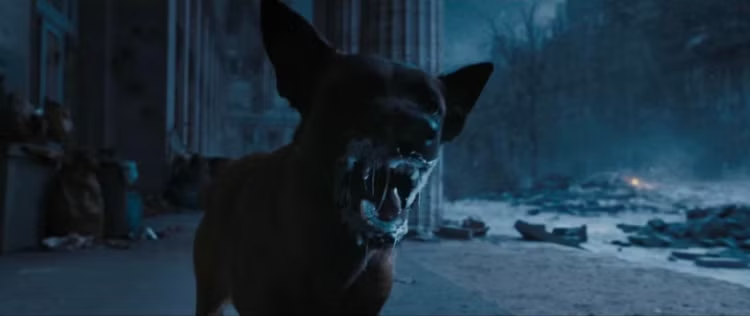
Creature grooming turns coat references into a controlled fur design. We plan length, direction, clumping, deformation and shading around the character’s silhouette, camera distance and production pipeline.
Fur changes how a creature reads before an audience notices individual hairs. A dense cheek, a short muzzle or longer guard hairs can alter the apparent anatomy. Grooming therefore needs an approved body and a clear visual direction, followed by tests in movement and representative lighting. A beautiful still render alone does not establish that a groom is ready for a moving character.
Build the coat around its use.
01
Coat design and regions
Separate the coat into useful regions such as muzzle, cheeks, ears, torso and limbs. Define direction changes, length and density from reference rather than using one setting across the whole animal. Review the silhouette at the framing the audience will actually see.
02
Guides, clumps and variation
Develop guide flow and the hierarchy of large and small clumps. Introduce controlled variation where it supports the coat, while keeping the overall shape readable. Agree which source groom files and editable controls the receiving team needs instead of assuming a render cache is sufficient.
03
Deformation and simulation scope
Check how the coat follows skin movement around joints and compression areas. Decide whether the performance needs dynamic simulation, authored secondary motion or a simpler deformation setup. Collision, caching and shot-specific cleanup are separate responsibilities that should be assigned before animation delivery.
04
Shading and pipeline delivery
Test the fur in representative lighting with the intended renderer. Agree shader dependencies, texture maps, binding data and cache conventions. A real-time fur treatment may require a different representation and budget; a film groom should not be assumed to transfer directly into an engine.
Approve the coat. Test it in context.
Set the coat references
Identify species, style, length and grooming direction. Mark which details are essential to the character and which can be simplified.
Review shape before detail
Approve the broad fur silhouette and regional transitions before refining individual strands and small-scale variation.
Exercise key movements
Check bends, facial compression and areas where limbs meet the body. Review intersections and shape changes using representative poses.
Agree the delivery test
Validate the groom in the target setup with representative lighting and a short motion test. Record required plugins, versions and cache dependencies.
Related work / Mimic Productions
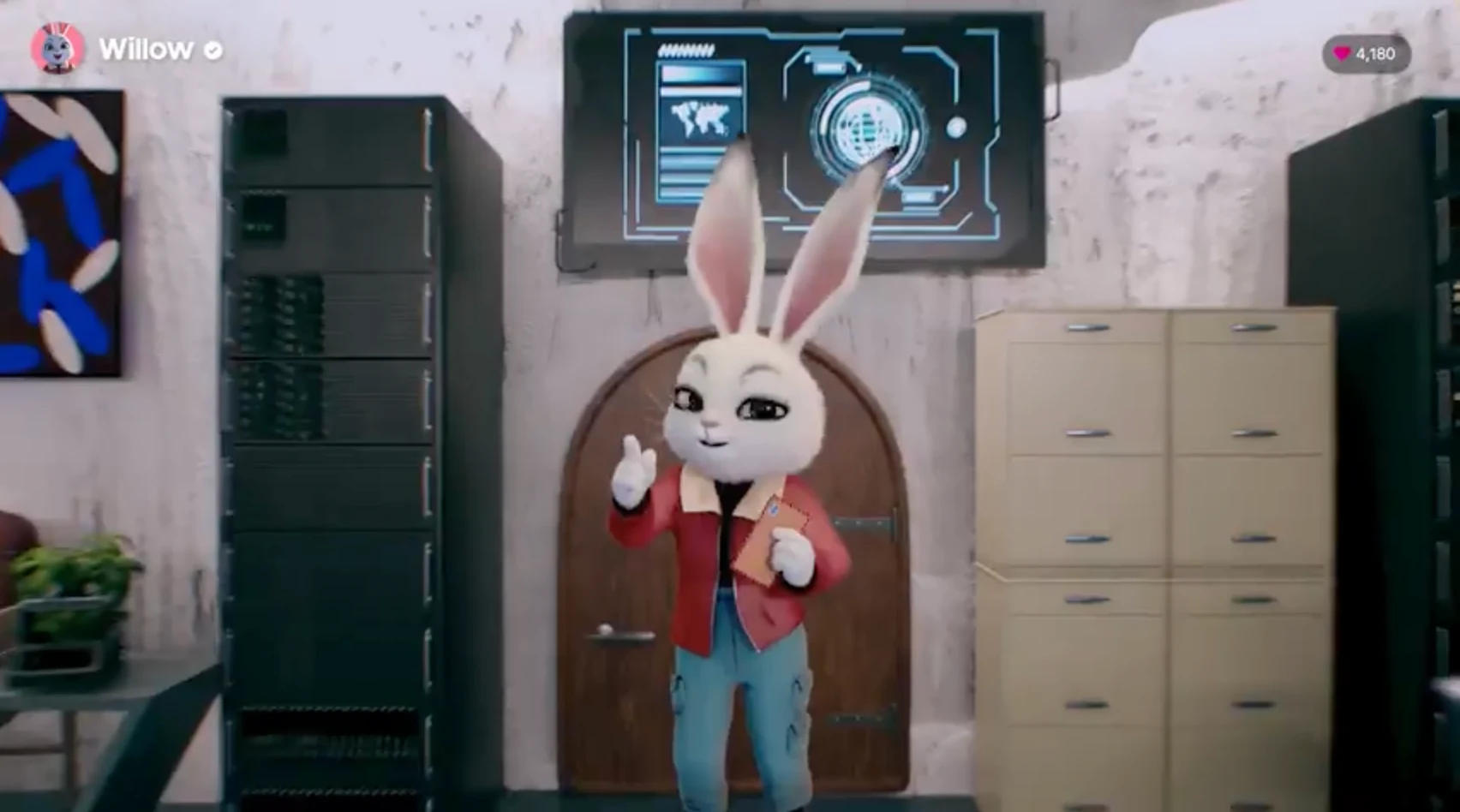
Willow. Character in the coat.
Mimic Productions lists grooming, character creation, keyframe animation, look development and rendering for Samsung’s Willow campaign with Kingdom of Something. The rabbit character provides relevant context for a fur-bearing asset. The project record does not publish a reusable performance budget or a universal groom setup; those need to be defined for each new production.
Coat references, desired style and closest camera framing
Renderer or engine, versions and available groom tools
Representative poses, animation and simulation expectations
Required source files, caches, review milestones and handoff owner
Production questions.
Can you groom an existing creature model?
Yes, subject to an asset review. The mesh, UVs, scale and deformation setup need to support the proposed groom. Changes to the underlying body after approval can require rebinding or rebuilding parts of the coat.
Is fur simulation always necessary?
No. The coat length, motion and framing determine whether simulation adds useful behaviour. Short fur and long loose hair can require very different approaches. Agree the required movement before choosing the setup.
Can a film groom be used in a game?
A real-time version may need different geometry, materials and levels of detail. Share the target engine and performance constraints so the appropriate representation can be scoped rather than assuming the film asset will transfer unchanged.
What should be checked before final groom delivery?
Check the approved silhouette, deformation, intersections and shading in the receiving environment. Verify that source files or caches, bindings, texture paths and software dependencies match the agreed delivery list.