The direct answer
Motion matching is worth considering when a game creature needs responsive movement across many speeds, turns and transitions, and the project can supply a consistent animation library. It selects suitable poses from existing animation data; it does not create missing performances or repair an unsuitable rig. For a creature with a small, predictable movement set, a state machine may be the more practical starting point.
The useful question is not whether a system looks impressive in a demonstration. It is whether your creature can move convincingly under the inputs, camera angles and performance limits of your game. A beautiful straight-line run tells you little about an abrupt reversal, a slow approach to an object or an interrupted attack.
This guide helps producers, art leads and technical animators plan that decision together. It focuses on animation scope, testing and handoff rather than a version-specific setup tutorial. Our game creature design and animation service covers the asset-production conversation; engine integration responsibilities should always be agreed in the brief.
Table of Contents
What motion matching actually does
In Unreal Engine, Motion Matching uses the Pose Search system to choose animation poses from a database against a runtime query. Epic describes it as an alternative to state machines or blendspaces. Its Motion Matching documentation explains the schema, database and animation-node setup. Check that documentation against the engine version your team has locked.
For production planning, think of the database as a collection of useful movement choices. The system needs material that represents the actions you expect to see. A gap in the library is still a production gap, even when the selection system is sophisticated. Buying or creating many clips is not the same as covering the right situations.
Separate movement selection from creature behaviour. Deciding to approach, flee or investigate is a gameplay problem; selecting an appropriate movement pose is an animation problem. Our guide to real-time creature behaviour systems discusses that wider relationship. A motion-matching implementation still needs clear boundaries with gameplay, navigation and authored actions.
When a state machine is the better starting point
Start with the simplest approach that satisfies the approved experience. A background animal that idles, walks along a route and performs one reaction may not justify a large locomotion database. A tightly staged encounter may benefit more from deliberate action timing than from a broad range of movement choices.
A state-machine approach makes it straightforward to reason about a small set of named states and transitions. That does not make it free to maintain: additional actions and exceptions can grow the transition logic. Compare actual production effort for your creature instead of assuming either method is always cheaper or more realistic.
Motion matching becomes a stronger candidate when frequent changes of direction, speed or intention expose the limits of the current animation setup. A useful decision test is to implement the same short movement challenge in both approaches. Review responsiveness, contact quality, artist iteration time and runtime cost against shared acceptance criteria.
A mixed approach is also worth discussing. Locomotion and highly authored actions need not use identical selection rules. If an attack, landing or interaction must hit a precise gameplay moment, agree how that action takes control and how movement resumes afterwards. Do not promise that one system will solve every animation requirement.
Why quadrupeds need their own movement plan
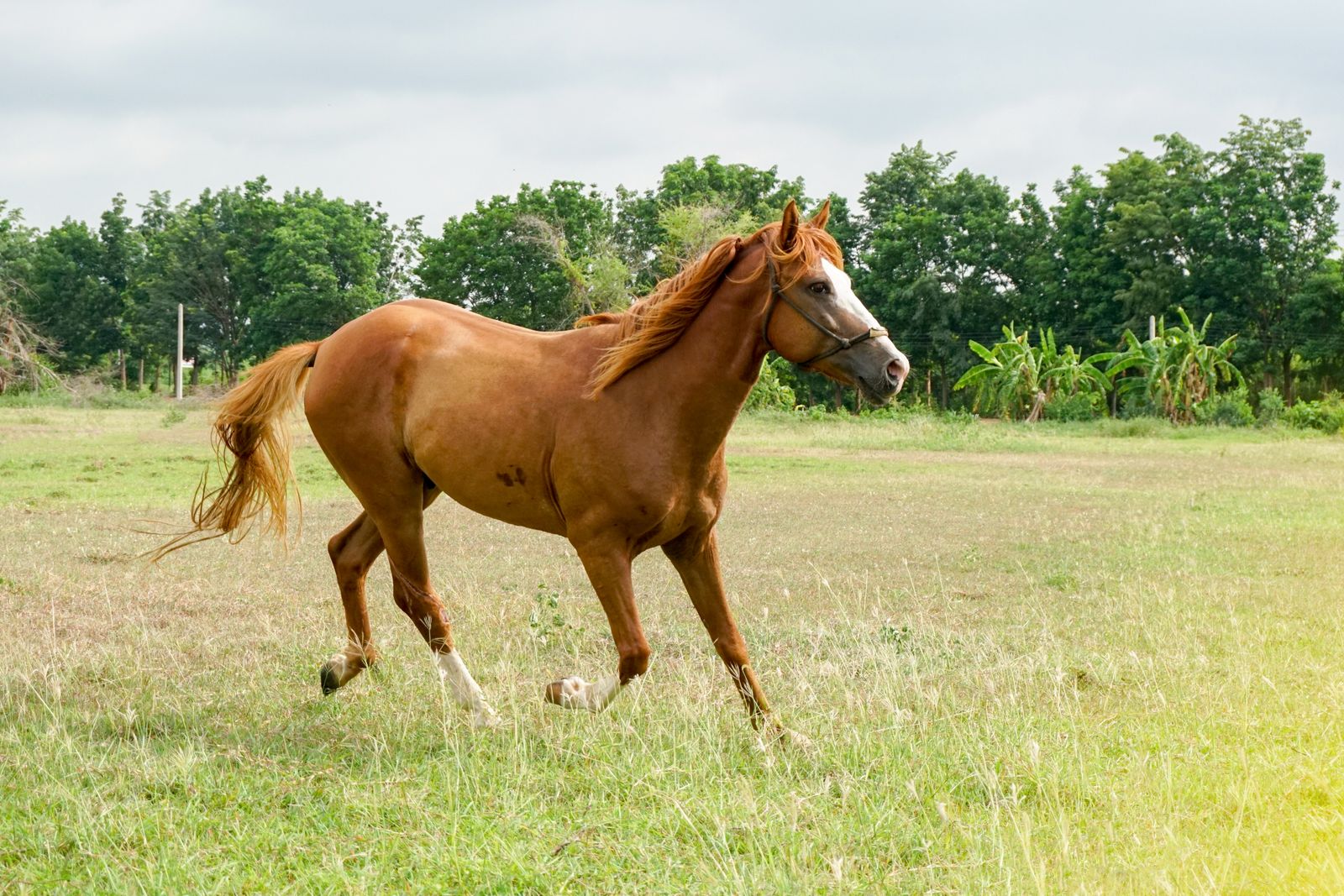
Real animal photography can help identify body proportions and readable poses, as in this horse reference. A still image does not establish a full gait: use suitable video reference to study contact order, timing and weight transfer before building animation. These photographs are anatomical references, not screenshots of a motion-matching implementation or Mimic project work.
A four-legged creature introduces relationships between forelimbs, hindlimbs, shoulders, pelvis and spine that a human demonstration does not prove. Epic's Game Animation Sample demonstrates human traversal. Treat it as a learning resource, not a ready-made quadruped solution or evidence that a particular animal will work without adaptation.
Plan the skeleton, proportions and movement vocabulary together. A heavy fictional beast and a light dog should not inherit the same performance merely because both have four legs. Establish how the creature accelerates, carries its head, shifts its weight and communicates intention. The quadruped animation guide covers those foundations in more detail.
Approve a small set of movement tests before detailed polishing. For example, ask whether the same creature can move slowly, turn tightly and stop from a faster gait while retaining its intended weight. Review the model and rig during these tests. If shoulder or hip deformation breaks, changing the animation-selection system will not fix the underlying asset.
Build an animation coverage brief before expanding the library
Write a movement coverage list using gameplay situations rather than an arbitrary clip count. Include the speeds, directions and transitions players can actually demand. Define which actions are essential for the first playable build and which can follow later. This makes estimates easier to compare and prevents an attractive but incomplete delivery.
For a grounded companion creature, the initial discussion might include idle-to-move, sustained travel, gentle and sharp turns, deceleration, stopping and restarting. Add reversals, side steps or backward movement only where the design calls for them. An enemy with different interaction rules will need a different list. There is no universal minimum number of clips that makes every creature production-ready.
Specify the expected root-motion treatment, skeleton version, units, naming and export conventions with the receiving technical animator. Unreal's documented locomotion workflow uses root-motion animation data. Confirm the requirements of your chosen implementation before commissioning a library, rather than discovering incompatible assumptions at import.
Keep source quality consistent. Review movement scale, contact timing and the creature's characteristic posture across the set. Where several artists or suppliers contribute, provide a shared reference scene and named approval owner. If you are commissioning the underlying asset as well, connect these requirements to creature modelling and rigging and animation from the outset.
Test direction changes and contacts in context
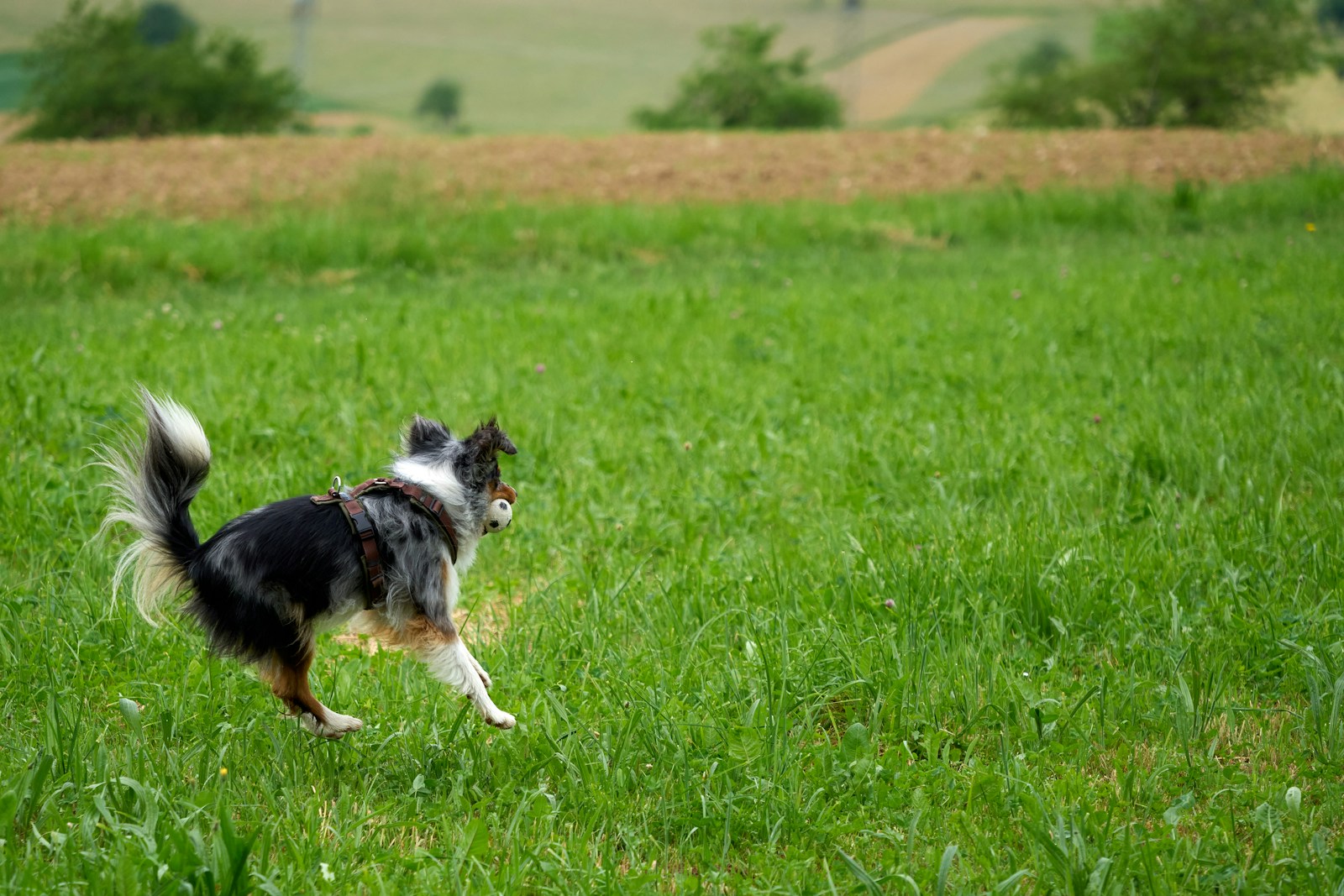
This running-dog reference illustrates why an animation review needs to consider the whole body, including head carriage and limb position. Use moving reference for the timing. In the game, judge the creature from the intended gameplay camera as well as in a close inspection view; a subtle pose issue and a silhouette-breaking problem need different priorities.
Build a repeatable review route containing the inputs that are most likely to expose weaknesses. Include changes of speed, short stops, tight corners and repeated reversals where those actions are supported. Run the same route after each major library or configuration update. Save a short capture and the build identifier so feedback refers to a reproducible result.
Investigate foot sliding by checking source motion, movement speed, transitions and any contact correction together. Do not simply add more clips until the visible symptom disappears. A consistent diagnostic sequence helps distinguish missing coverage from a mismatched movement model or a problem introduced elsewhere in the animation graph.
Terrain needs its own acceptance tests. A successful result on flat ground does not establish quality on slopes, steps or uneven surfaces. Agree which terrain conditions the creature must support, and which are outside scope. Review the interaction between locomotion and any ground adaptation rather than treating them as independent visual features.
Budget for runtime testing and production maintenance
Do not estimate suitability from a single creature in an empty editor scene. Ask the engineering team to profile a representative build on the target hardware, with the expected number of visible creatures and the rest of the scene present. Record the test conditions alongside the results. A performance claim without those conditions is difficult to reuse.
Set ownership for database configuration, animation imports, gameplay integration and bug fixes. An external studio may supply a rig and validated animation set while your internal team owns the runtime system. Another engagement may include integration work. Both arrangements can work, but the quotation and acceptance criteria must describe the same boundary.
Allow time for changes to the creature itself. A proportion adjustment or revised skeleton can affect previously approved movement. Keep a change log, identify which tests need to be rerun, and avoid mixing incompatible asset versions in the review build. Our creature pipeline handoff guide explains the information a receiving team needs to reproduce an approved result.
A practical pilot before full production
Consider this hypothetical brief: a companion creature follows the player, pauses nearby and changes direction when the player turns. The first pilot should prove those behaviours with a limited movement set. It does not need every cinematic flourish, facial performance or optional reaction planned for the finished game.
First, agree a short test route and the camera distance. Next, approve a representative rig and the minimum movement coverage needed for that route. Then review the engine result with art and engineering together. Record what is missing, whether it requires new animation or technical adjustment, and who owns the next step.
End the pilot with a decision, not just a video. The outcome might be to proceed with motion matching, retain a simpler locomotion system, or revise the creature's movement requirements. Each is a useful result when it prevents larger production spending against the wrong assumptions. Use creature QA testing criteria to turn visual feedback into repeatable checks.
What to send when requesting a creature animation quote
A useful enquiry includes the creature concept or current model, target engine version, platforms, camera distance and intended actions. State whether the skeleton is approved and whether animations already exist. Include representative gameplay footage if available, together with the deadline and the people responsible for approvals.
Describe the required delivery precisely: source scenes, engine-ready animation files, rig documentation, import conventions and test captures may all matter. State who will build and maintain the runtime animation system. If you only need asset production, say so; if you need help defining the technical handoff, make that part of the discussion.
Share the movement coverage list and any known constraints rather than requesting an unspecified number of animations. Our creature design production-brief checklist can help organise the wider requirements. A clear brief supports a more useful estimate, though final cost and schedule still depend on the reviewed scope.
Motion matching FAQs
The useful question is not whether a system looks impressive in a demonstration. It is whether your creature can move convincingly under the inputs, camera angles and performance limits of your game. A beautiful straight-line run tells you little about an abrupt reversal, a slow approach to an object or an interrupted attack.
This guide helps producers, art leads and technical animators plan that decision together. It focuses on animation scope, testing and handoff rather than a version-specific setup tutorial. Our game creature design and animation service covers the asset-production conversation; engine integration responsibilities should always be agreed in the brief.
Table of Contents
What motion matching actually does
In Unreal Engine, Motion Matching uses the Pose Search system to choose animation poses from a database against a runtime query. Epic describes it as an alternative to state machines or blendspaces. Its Motion Matching documentation explains the schema, database and animation-node setup. Check that documentation against the engine version your team has locked.
For production planning, think of the database as a collection of useful movement choices. The system needs material that represents the actions you expect to see. A gap in the library is still a production gap, even when the selection system is sophisticated. Buying or creating many clips is not the same as covering the right situations.
Separate movement selection from creature behaviour. Deciding to approach, flee or investigate is a gameplay problem; selecting an appropriate movement pose is an animation problem. Our guide to real-time creature behaviour systems discusses that wider relationship. A motion-matching implementation still needs clear boundaries with gameplay, navigation and authored actions.
When a state machine is the better starting point
Start with the simplest approach that satisfies the approved experience. A background animal that idles, walks along a route and performs one reaction may not justify a large locomotion database. A tightly staged encounter may benefit more from deliberate action timing than from a broad range of movement choices.
A state-machine approach makes it straightforward to reason about a small set of named states and transitions. That does not make it free to maintain: additional actions and exceptions can grow the transition logic. Compare actual production effort for your creature instead of assuming either method is always cheaper or more realistic.
Motion matching becomes a stronger candidate when frequent changes of direction, speed or intention expose the limits of the current animation setup. A useful decision test is to implement the same short movement challenge in both approaches. Review responsiveness, contact quality, artist iteration time and runtime cost against shared acceptance criteria.
A mixed approach is also worth discussing. Locomotion and highly authored actions need not use identical selection rules. If an attack, landing or interaction must hit a precise gameplay moment, agree how that action takes control and how movement resumes afterwards. Do not promise that one system will solve every animation requirement.
Why quadrupeds need their own movement plan
Real animal photography can help identify body proportions and readable poses, as in this horse reference. A still image does not establish a full gait: use suitable video reference to study contact order, timing and weight transfer before building animation. These photographs are anatomical references, not screenshots of a motion-matching implementation or Mimic project work.
A four-legged creature introduces relationships between forelimbs, hindlimbs, shoulders, pelvis and spine that a human demonstration does not prove. Epic's Game Animation Sample demonstrates human traversal. Treat it as a learning resource, not a ready-made quadruped solution or evidence that a particular animal will work without adaptation.
Plan the skeleton, proportions and movement vocabulary together. A heavy fictional beast and a light dog should not inherit the same performance merely because both have four legs. Establish how the creature accelerates, carries its head, shifts its weight and communicates intention. The quadruped animation guide covers those foundations in more detail.
Approve a small set of movement tests before detailed polishing. For example, ask whether the same creature can move slowly, turn tightly and stop from a faster gait while retaining its intended weight. Review the model and rig during these tests. If shoulder or hip deformation breaks, changing the animation-selection system will not fix the underlying asset.
Build an animation coverage brief before expanding the library
Write a movement coverage list using gameplay situations rather than an arbitrary clip count. Include the speeds, directions and transitions players can actually demand. Define which actions are essential for the first playable build and which can follow later. This makes estimates easier to compare and prevents an attractive but incomplete delivery.
For a grounded companion creature, the initial discussion might include idle-to-move, sustained travel, gentle and sharp turns, deceleration, stopping and restarting. Add reversals, side steps or backward movement only where the design calls for them. An enemy with different interaction rules will need a different list. There is no universal minimum number of clips that makes every creature production-ready.
Specify the expected root-motion treatment, skeleton version, units, naming and export conventions with the receiving technical animator. Unreal's documented locomotion workflow uses root-motion animation data. Confirm the requirements of your chosen implementation before commissioning a library, rather than discovering incompatible assumptions at import.
Keep source quality consistent. Review movement scale, contact timing and the creature's characteristic posture across the set. Where several artists or suppliers contribute, provide a shared reference scene and named approval owner. If you are commissioning the underlying asset as well, connect these requirements to creature modelling and rigging and animation from the outset.
Test direction changes and contacts in context
This running-dog reference illustrates why an animation review needs to consider the whole body, including head carriage and limb position. Use moving reference for the timing. In the game, judge the creature from the intended gameplay camera as well as in a close inspection view; a subtle pose issue and a silhouette-breaking problem need different priorities.
Build a repeatable review route containing the inputs that are most likely to expose weaknesses. Include changes of speed, short stops, tight corners and repeated reversals where those actions are supported. Run the same route after each major library or configuration update. Save a short capture and the build identifier so feedback refers to a reproducible result.
Investigate foot sliding by checking source motion, movement speed, transitions and any contact correction together. Do not simply add more clips until the visible symptom disappears. A consistent diagnostic sequence helps distinguish missing coverage from a mismatched movement model or a problem introduced elsewhere in the animation graph.
Terrain needs its own acceptance tests. A successful result on flat ground does not establish quality on slopes, steps or uneven surfaces. Agree which terrain conditions the creature must support, and which are outside scope. Review the interaction between locomotion and any ground adaptation rather than treating them as independent visual features.
Budget for runtime testing and production maintenance
Do not estimate suitability from a single creature in an empty editor scene. Ask the engineering team to profile a representative build on the target hardware, with the expected number of visible creatures and the rest of the scene present. Record the test conditions alongside the results. A performance claim without those conditions is difficult to reuse.
Set ownership for database configuration, animation imports, gameplay integration and bug fixes. An external studio may supply a rig and validated animation set while your internal team owns the runtime system. Another engagement may include integration work. Both arrangements can work, but the quotation and acceptance criteria must describe the same boundary.
Allow time for changes to the creature itself. A proportion adjustment or revised skeleton can affect previously approved movement. Keep a change log, identify which tests need to be rerun, and avoid mixing incompatible asset versions in the review build. Our creature pipeline handoff guide explains the information a receiving team needs to reproduce an approved result.
A practical pilot before full production
Consider this hypothetical brief: a companion creature follows the player, pauses nearby and changes direction when the player turns. The first pilot should prove those behaviours with a limited movement set. It does not need every cinematic flourish, facial performance or optional reaction planned for the finished game.
First, agree a short test route and the camera distance. Next, approve a representative rig and the minimum movement coverage needed for that route. Then review the engine result with art and engineering together. Record what is missing, whether it requires new animation or technical adjustment, and who owns the next step.
End the pilot with a decision, not just a video. The outcome might be to proceed with motion matching, retain a simpler locomotion system, or revise the creature's movement requirements. Each is a useful result when it prevents larger production spending against the wrong assumptions. Use creature QA testing criteria to turn visual feedback into repeatable checks.
What to send when requesting a creature animation quote
A useful enquiry includes the creature concept or current model, target engine version, platforms, camera distance and intended actions. State whether the skeleton is approved and whether animations already exist. Include representative gameplay footage if available, together with the deadline and the people responsible for approvals.
Describe the required delivery precisely: source scenes, engine-ready animation files, rig documentation, import conventions and test captures may all matter. State who will build and maintain the runtime animation system. If you only need asset production, say so; if you need help defining the technical handoff, make that part of the discussion.
Share the movement coverage list and any known constraints rather than requesting an unspecified number of animations. Our creature design production-brief checklist can help organise the wider requirements. A clear brief supports a more useful estimate, though final cost and schedule still depend on the reviewed scope.
Motion matching FAQs
Does motion matching generate new creature animation?
Standard motion matching selects from supplied animation data. It should not be described as a tool that invents a finished movement library from nothing. Plan the required performances and the work needed to prepare, review and integrate them.
Can motion matching work for quadrupeds?
It can be considered for a quadruped workflow, but suitability depends on the skeleton, animation data and runtime implementation. Prove the required movement with a pilot. A successful human sample is not sufficient validation for a four-legged creature.
Is it always better than a state machine?
No. A small, predictable movement set may be easier to manage with a state machine. Compare approaches against the same gameplay requirements, animation coverage, maintenance needs and target-device tests before choosing.
How many animations do we need?
There is no reliable universal number. Start with required speeds, directions, starts, stops and interactions, then identify missing coverage through testing. The useful measure is whether the creature handles the agreed situations convincingly, not simply how many files are delivered.
Can we reuse human motion capture for an animal?
Human movement should not be assumed to transfer convincingly to a quadruped. Anatomy and gait differ. Any adapted material needs specialist review, correction and testing for the specific creature rather than an automatic promise of usable results.
Will motion matching remove foot sliding?
Not automatically. Sliding can involve the source animation, movement speed, transitions, terrain adaptation or their interaction. Diagnose the cause in a reproducible test before deciding whether to change animation coverage or the technical setup.
Should we select the system before commissioning a rig?
Discuss the intended system early enough to agree skeleton and delivery requirements. You do not need to lock every implementation detail before exploration, but a representative rig and movement pilot should precede a large animation commission.
What does Mimic Creatures need to discuss the project?
Send the creature concept or asset, required actions, engine version, platforms, camera requirements and timeline. Explain whether you need modelling, rigging, animation, or a defined combination. Agree engine integration responsibilities separately as part of the production scope.
Plan the movement before scaling production
Motion matching is a production choice supported by animation data, clear responsibilities and testing. Use a focused pilot to find out whether it serves your creature before expanding the library. The strongest outcome is a movement system that meets the experience, with a delivery process your team can maintain.
Discuss your creature animation brief with Mimic Creatures. Share your creature type, target platform and required movement set so we can discuss the asset, rigging and animation scope for your project.


Comments