The direct answer
Fur cards represent hair with textured polygon surfaces; strand grooms render hair as curves or strands. Choose between them by testing the creature at its gameplay distance, on the target platform, under representative lighting and motion. Cards can offer a practical alternative where strands are unsupported or too costly, while a hybrid approach can use different representations across quality settings or levels of detail.
There is no universal winner and no useful polygon limit that applies to every creature. A close-up companion, a distant herd and an interactive creature viewed in a headset present different problems. The right decision preserves the animal's readable shape while meeting the receiving team's technical requirements.
This guide supports production planning for game creature design and animation. It does not repeat a complete modelling tutorial. Instead, it explains what to compare, what to test and what to put in a fur-production brief before approving the final asset.
Table of Contents
What fur cards and strand grooms actually contain
Fur cards are polygon strips or patches carrying textures that suggest groups of hairs. Their shape, orientation, layering and material determine how the coat reads. A convincing card asset depends on the arrangement of those groups as well as the texture; simply placing many flat strips over a body is not a complete solution.
A strand groom describes hair using curves and related attributes. Depending on the engine and workflow, guide curves, interpolation, binding, simulation and shading contribute to the final result. Exporting curves from a grooming application is only part of delivery. The receiving engine must support the representation and reproduce the approved appearance.
Both methods need decisions about density, length, flow and clumping. Those artistic choices should follow the creature's anatomy and intended style. Representation is a technical choice about how to deliver that appearance. Our creature grooming and fur service starts with those requirements rather than assuming one technology fits every animal.
Unreal Engine's groom scalability and performance documentation describes strands, cards and meshes as supported groom representations, with platform and scalability considerations. Confirm the documentation for the engine version in your project: a capability listed for one version or platform is not a guarantee for every shipping configuration.
Start with coat shape and the gameplay camera

The rabbit photograph above is a natural coat reference, not a rendered fur-card or strand-groom example. Notice the contrast between the longer body coat and shorter facial hair. The ears and eyes remain readable despite the soft outline. References like this help define what the asset must communicate before selecting its technical representation.
Review the creature at the closest, typical and farthest expected distances. A turntable filling the screen can encourage spending on details that disappear in gameplay. Conversely, a companion that approaches the camera may expose flat edges, abrupt transitions or gaps that were invisible in a distant review.
Record which regions need special attention. A muzzle, ear edge, tail tip or mane may carry more visual identity than a uniformly dense body coat. Separate those priorities in the brief. The base model and the groom should be reviewed together so hair does not unintentionally change the approved proportions.
Use the existing game creature production guide to connect this decision with the wider character scope. Fur should support the creature's role, animations and encounter design. It should not become a separate visual target that the gameplay asset cannot sustain.
When fur cards are a useful starting point
Cards are worth testing when the target renderer does not support the required strand workflow, when broad platform coverage is important, or when the gameplay camera does not need individual strand detail. They can also be used for lower-detail versions of an asset whose closest view uses another representation.
Their apparent simplicity can be misleading. Overlapping transparent or masked surfaces still have rendering costs, and those costs depend on screen coverage and material setup. A very dense card stack can spend resources on layers the player barely sees. Profile the actual asset rather than assuming that any card-based coat must be inexpensive.
Check the silhouette from several angles. Flat surfaces can disappear edge-on or reveal a repeated texture pattern. Pay attention to the top of the shoulders, cheeks and tail, where the outline may change rapidly as the creature turns. Review both the geometry and the texture atlas before adding more layers to hide a problem.
Coordinate the card material with the creature texturing workflow. Agree what each texture channel contains, how it is imported and which material settings the receiving team expects. A texture package that looks correct in a different shader is not sufficient proof of an engine-ready handoff.
When strand grooms deserve a closer look
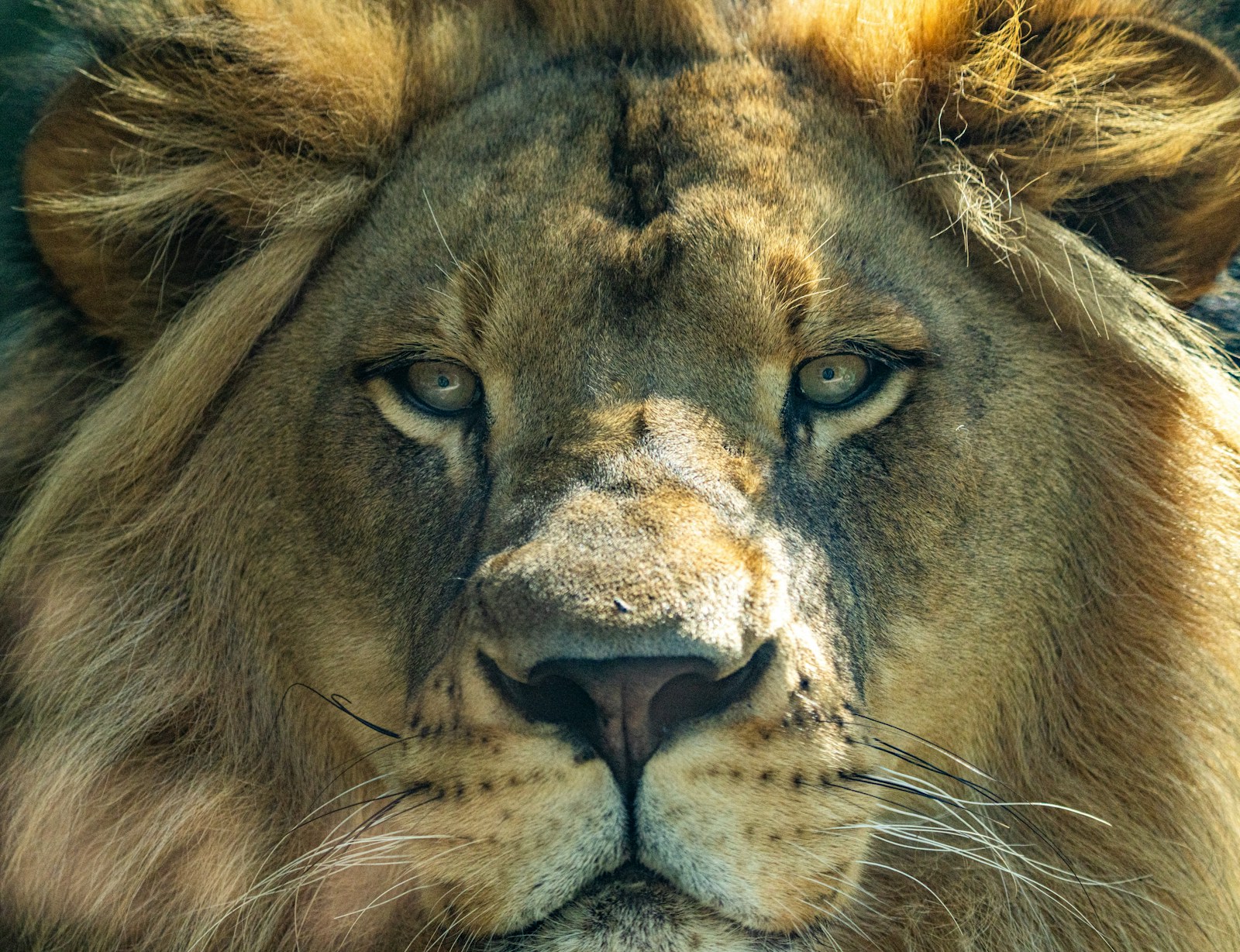
The lion reference shows why hair direction, overlapping masses and variation in length matter to a mane. It illustrates the desired coat structure, not the performance of a particular rendering method. A game asset still needs a separate technical test before that visual target becomes a delivery commitment.
Strands can be attractive when close views and fine hair motion are important and the target platform supports the intended groom pipeline. They provide a way to represent individual hairs, but the result depends on the quality of the groom, lighting and temporal behaviour. More curves alone do not guarantee a convincing animal.
Epic's performance guidance separates costs such as simulation, interpolation, voxelisation, visibility and lighting. That is a useful reason to investigate a slow groom by stage rather than reducing detail blindly. Confirm which stages are active in your particular setup and measure the relevant scene with the production team.
Test binding and deformation with the actual animated mesh early. A groom that follows a neutral pose correctly can still behave poorly during a jaw opening, a shoulder compression or a fast turn. The creature rigging and animation team should be involved before the coat is treated as finished.
Consider a hybrid coat and planned LOD changes
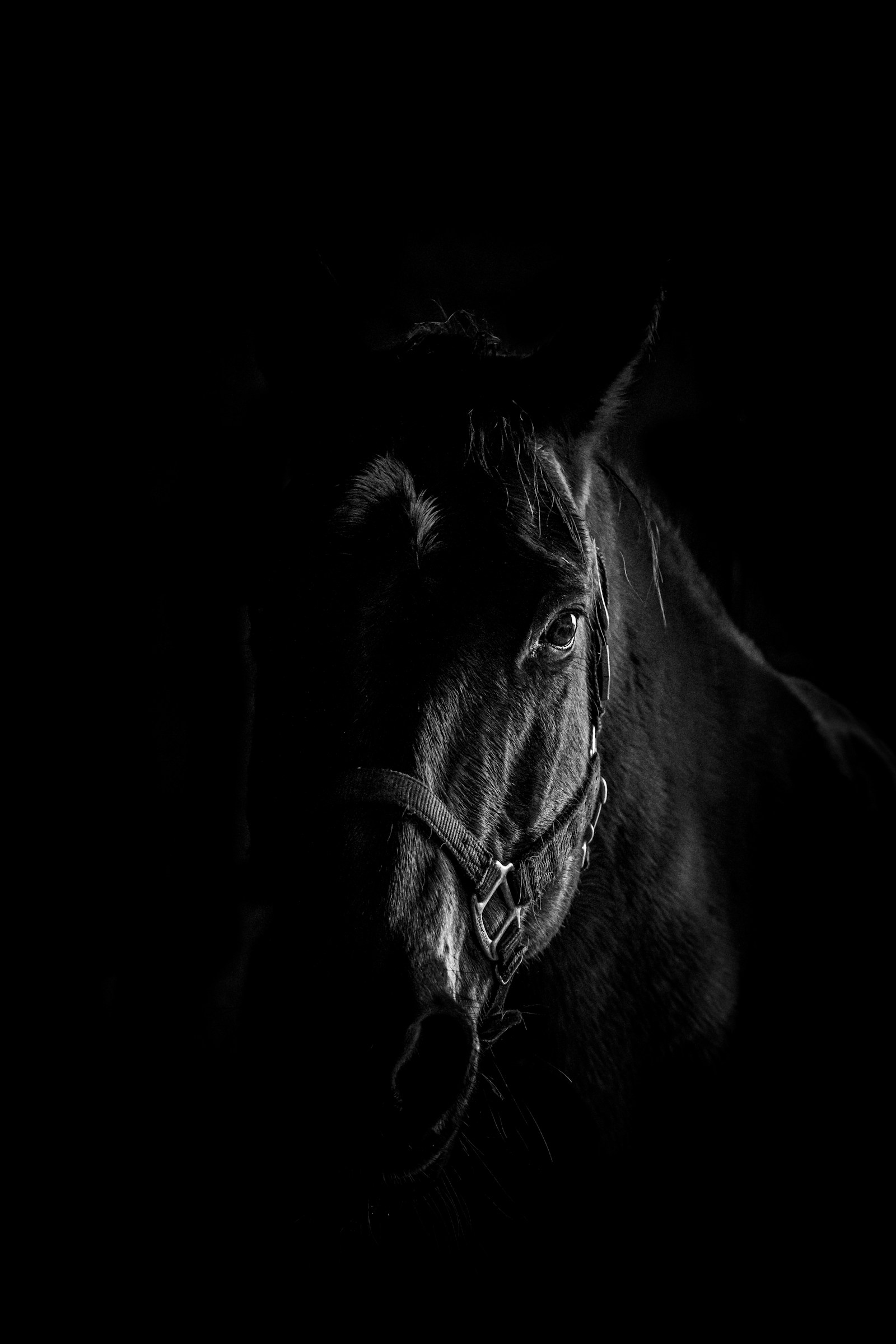
The dark horse portrait shows how lighting and tonal contrast affect the visibility of hair around the forehead and face. This natural reference is useful when discussing which coat details remain readable. It does not imply that the photograph was created with a specific asset workflow or that every horse should use the same solution.
A hybrid asset may use different representations by body region, viewing distance or platform. For example, the priority could be preserving a mane's outline while simplifying less visible body detail. The exact arrangement belongs in a tested asset plan, not a rule imposed before the target scene is understood.
In Unreal Engine, groom levels of detail can be configured with different available geometry representations. Coordinate that setup with platform and quality settings. The receiving team should know which representation is expected at each setting and what happens when a higher-quality option is unavailable.
Inspect transitions during motion and changing distance. An abrupt loss of volume or a shift in colour can be more distracting than lower detail used consistently. Keep approved comparison views and document the transition behaviour. The creature integration guide covers the wider responsibility of proving the asset inside its destination environment.
Test lighting, movement and the full encounter

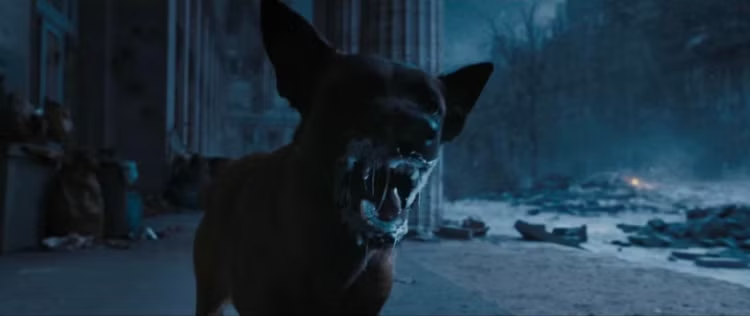
The white dog's coat is a reference for layered volume and the way fine edges separate from their surroundings. It is not a screenshot of an engine test. In production, the corresponding checks must happen in the target renderer, with the creature moving and with the project's actual image settings.
Build a small review scene containing the approved cameras, representative lights and a few high-risk actions. Include a turn, a fast movement, a compressed pose and a close view of the face where relevant. Look for flicker, unstable edges, visible layers, contact intersections and changes in apparent density.
Then test the real encounter. One creature in an empty environment does not establish the budget for a group in a busy scene. Record the visible creature count, camera distance, output resolution, quality settings and hardware used for each capture. Without that context, performance numbers cannot be compared usefully.
Agree who owns material setup, groom binding, simulation tuning and optimisation. A specialist supplier can prepare an asset, but an integration team may need to validate it alongside gameplay systems. The creature QA guide helps turn that shared responsibility into an acceptance checklist rather than an informal visual sign-off.
Specify the files, limits and approval evidence
The brief should identify the engine and version, target platforms, typical camera distance, expected creature count and required animations. Include visual references with notes explaining what matters: the softness of a silhouette, the direction of a mane or the behaviour of fur around the face. A collection of attractive images without priorities is difficult to evaluate.
Request a testable delivery package. Depending on the agreed workflow, this may include the source groom, card geometry, texture atlas, material setup, binding data, LOD assets and an engine test scene. List the required software and plugins. Do not assume that a rendered preview includes editable files or a complete runtime implementation.
Agree limits with the receiving technical team and state how they will be measured. Avoid assigning a generic triangle count to every creature or promising a fixed frame rate based on a single asset. Groom cost competes with the rest of the scene; the practical target is successful integration under the project's defined conditions.
Use the creature pipeline handoff guide to document paths, dependencies and approved versions. Include known limitations and comparison captures. If the design or animation range changes later, those records make it easier to identify whether a problem is a new requirement or a regression in an approved behaviour.
Fur cards and strand groom FAQs
There is no universal winner and no useful polygon limit that applies to every creature. A close-up companion, a distant herd and an interactive creature viewed in a headset present different problems. The right decision preserves the animal's readable shape while meeting the receiving team's technical requirements.
This guide supports production planning for game creature design and animation. It does not repeat a complete modelling tutorial. Instead, it explains what to compare, what to test and what to put in a fur-production brief before approving the final asset.
Table of Contents
What fur cards and strand grooms actually contain
Fur cards are polygon strips or patches carrying textures that suggest groups of hairs. Their shape, orientation, layering and material determine how the coat reads. A convincing card asset depends on the arrangement of those groups as well as the texture; simply placing many flat strips over a body is not a complete solution.
A strand groom describes hair using curves and related attributes. Depending on the engine and workflow, guide curves, interpolation, binding, simulation and shading contribute to the final result. Exporting curves from a grooming application is only part of delivery. The receiving engine must support the representation and reproduce the approved appearance.
Both methods need decisions about density, length, flow and clumping. Those artistic choices should follow the creature's anatomy and intended style. Representation is a technical choice about how to deliver that appearance. Our creature grooming and fur service starts with those requirements rather than assuming one technology fits every animal.
Unreal Engine's groom scalability and performance documentation describes strands, cards and meshes as supported groom representations, with platform and scalability considerations. Confirm the documentation for the engine version in your project: a capability listed for one version or platform is not a guarantee for every shipping configuration.
Start with coat shape and the gameplay camera
The rabbit photograph above is a natural coat reference, not a rendered fur-card or strand-groom example. Notice the contrast between the longer body coat and shorter facial hair. The ears and eyes remain readable despite the soft outline. References like this help define what the asset must communicate before selecting its technical representation.
Review the creature at the closest, typical and farthest expected distances. A turntable filling the screen can encourage spending on details that disappear in gameplay. Conversely, a companion that approaches the camera may expose flat edges, abrupt transitions or gaps that were invisible in a distant review.
Record which regions need special attention. A muzzle, ear edge, tail tip or mane may carry more visual identity than a uniformly dense body coat. Separate those priorities in the brief. The base model and the groom should be reviewed together so hair does not unintentionally change the approved proportions.
Use the existing game creature production guide to connect this decision with the wider character scope. Fur should support the creature's role, animations and encounter design. It should not become a separate visual target that the gameplay asset cannot sustain.
When fur cards are a useful starting point
Cards are worth testing when the target renderer does not support the required strand workflow, when broad platform coverage is important, or when the gameplay camera does not need individual strand detail. They can also be used for lower-detail versions of an asset whose closest view uses another representation.
Their apparent simplicity can be misleading. Overlapping transparent or masked surfaces still have rendering costs, and those costs depend on screen coverage and material setup. A very dense card stack can spend resources on layers the player barely sees. Profile the actual asset rather than assuming that any card-based coat must be inexpensive.
Check the silhouette from several angles. Flat surfaces can disappear edge-on or reveal a repeated texture pattern. Pay attention to the top of the shoulders, cheeks and tail, where the outline may change rapidly as the creature turns. Review both the geometry and the texture atlas before adding more layers to hide a problem.
Coordinate the card material with the creature texturing workflow. Agree what each texture channel contains, how it is imported and which material settings the receiving team expects. A texture package that looks correct in a different shader is not sufficient proof of an engine-ready handoff.
When strand grooms deserve a closer look
The lion reference shows why hair direction, overlapping masses and variation in length matter to a mane. It illustrates the desired coat structure, not the performance of a particular rendering method. A game asset still needs a separate technical test before that visual target becomes a delivery commitment.
Strands can be attractive when close views and fine hair motion are important and the target platform supports the intended groom pipeline. They provide a way to represent individual hairs, but the result depends on the quality of the groom, lighting and temporal behaviour. More curves alone do not guarantee a convincing animal.
Epic's performance guidance separates costs such as simulation, interpolation, voxelisation, visibility and lighting. That is a useful reason to investigate a slow groom by stage rather than reducing detail blindly. Confirm which stages are active in your particular setup and measure the relevant scene with the production team.
Test binding and deformation with the actual animated mesh early. A groom that follows a neutral pose correctly can still behave poorly during a jaw opening, a shoulder compression or a fast turn. The creature rigging and animation team should be involved before the coat is treated as finished.
Consider a hybrid coat and planned LOD changes
The dark horse portrait shows how lighting and tonal contrast affect the visibility of hair around the forehead and face. This natural reference is useful when discussing which coat details remain readable. It does not imply that the photograph was created with a specific asset workflow or that every horse should use the same solution.
A hybrid asset may use different representations by body region, viewing distance or platform. For example, the priority could be preserving a mane's outline while simplifying less visible body detail. The exact arrangement belongs in a tested asset plan, not a rule imposed before the target scene is understood.
In Unreal Engine, groom levels of detail can be configured with different available geometry representations. Coordinate that setup with platform and quality settings. The receiving team should know which representation is expected at each setting and what happens when a higher-quality option is unavailable.
Inspect transitions during motion and changing distance. An abrupt loss of volume or a shift in colour can be more distracting than lower detail used consistently. Keep approved comparison views and document the transition behaviour. The creature integration guide covers the wider responsibility of proving the asset inside its destination environment.
Test lighting, movement and the full encounter
The white dog's coat is a reference for layered volume and the way fine edges separate from their surroundings. It is not a screenshot of an engine test. In production, the corresponding checks must happen in the target renderer, with the creature moving and with the project's actual image settings.
Build a small review scene containing the approved cameras, representative lights and a few high-risk actions. Include a turn, a fast movement, a compressed pose and a close view of the face where relevant. Look for flicker, unstable edges, visible layers, contact intersections and changes in apparent density.
Then test the real encounter. One creature in an empty environment does not establish the budget for a group in a busy scene. Record the visible creature count, camera distance, output resolution, quality settings and hardware used for each capture. Without that context, performance numbers cannot be compared usefully.
Agree who owns material setup, groom binding, simulation tuning and optimisation. A specialist supplier can prepare an asset, but an integration team may need to validate it alongside gameplay systems. The creature QA guide helps turn that shared responsibility into an acceptance checklist rather than an informal visual sign-off.
Specify the files, limits and approval evidence
The brief should identify the engine and version, target platforms, typical camera distance, expected creature count and required animations. Include visual references with notes explaining what matters: the softness of a silhouette, the direction of a mane or the behaviour of fur around the face. A collection of attractive images without priorities is difficult to evaluate.
Request a testable delivery package. Depending on the agreed workflow, this may include the source groom, card geometry, texture atlas, material setup, binding data, LOD assets and an engine test scene. List the required software and plugins. Do not assume that a rendered preview includes editable files or a complete runtime implementation.
Agree limits with the receiving technical team and state how they will be measured. Avoid assigning a generic triangle count to every creature or promising a fixed frame rate based on a single asset. Groom cost competes with the rest of the scene; the practical target is successful integration under the project's defined conditions.
Use the creature pipeline handoff guide to document paths, dependencies and approved versions. Include known limitations and comparison captures. If the design or animation range changes later, those records make it easier to identify whether a problem is a new requirement or a regression in an approved behaviour.
Fur cards and strand groom FAQs
Are fur cards always faster than strands?
No. Cards are a useful option, but their cost depends on geometry, material complexity, overlapping layers and screen coverage. Strands have their own rendering and simulation costs. Measure both suitable candidates in the same representative scene rather than comparing labels alone.
Can one creature use cards and strands?
Yes, where the engine and asset setup support it. Different regions, levels of detail or platform configurations can use different representations. Test appearance and transitions, and document which version should be active in each target configuration.
Is a film groom ready to use in a game?
Not automatically. A film groom may need conversion, reduced complexity, different materials, binding or another representation. Review it against the target engine, platform and gameplay camera before estimating the work required to make it suitable for real-time use.
What is the best polygon count for fur cards?
There is no universal count. The appropriate budget depends on the creature's size on screen, silhouette, material, number of visible assets and target hardware. Agree a project-specific target and validate the coat in the intended scene, including its lower-detail versions.
Will generating cards automatically finish the asset?
No. Generated cards still need review for coverage, direction, silhouette, texture quality, deformation and material behaviour. Automation can assist preparation, but the result must be checked against the same visual and technical acceptance criteria as a manually arranged asset.
Does short fur need individual strands?
Not necessarily. The answer depends on viewing distance and the appearance you need. Test whether the base surface, selected edge detail or another coat representation communicates the intended animal before committing to a more complex solution across the entire body.
Should fur move independently from the body?
Only where the intended look and actions require it. Long manes, tails or loose tufts may benefit from secondary motion, while other regions can follow the animated mesh. Confirm the simulation approach and its cost with the receiving team before approving that behaviour.
What should we include in a grooming enquiry?
Share the creature model or concept, coat references, engine version, target platforms, camera distances and key actions. Explain who handles integration and whether you need source files, a prepared engine asset or both. Include any established performance requirements and review deadlines.
Choose fur through a production test
The most useful comparison is an approved creature shown in its intended scene. Define the visual priorities, test candidate representations, review motion and lighting, then document the chosen delivery. That process avoids committing to detail the player cannot see or a coat the target platform cannot support.
Discuss your creature's fur requirements with Mimic Creatures. Share the target platform, camera requirements and available model so we can help scope a grooming workflow and the evidence needed for a reliable handoff.


Comments