The direct answer
3D mascot animation turns a brand character into a directed performance using a model, materials, a rig and animation. To commission it successfully, define the character's personality, required actions, product interactions, campaign formats and approval process before production. A finished film and a reusable character asset are different deliverables: specify which you need.
A mascot may already exist as a drawing, a costume or a familiar face on packaging. Bringing it into a commercial introduces decisions that a still illustration never had to answer. How does it turn? What happens when it smiles? Can its hands hold the product without changing the silhouette people recognise?
This guide is for brand teams, agencies and producers planning an animated campaign character. It focuses on the decisions that make a brief actionable, rather than repeating a general character-production tutorial. Our advertising creatures and brand mascots service explains the production scope available for a specific commission.
Table of Contents
Define the mascot's job in the campaign
Start with the audience's takeaway. Is the character demonstrating a product, delivering a joke, guiding a viewer through an unfamiliar feature or providing a recognisable sign-off? A single clear role helps the creative team decide how much acting, dialogue and physical interaction the asset needs.
Write three personality rules and three boundaries. A curious character might investigate an object before speaking; a reassuring character might use slower, deliberate gestures. Boundaries might include avoiding aggressive expressions, never looking clumsy with the product or keeping the character's behaviour appropriate for a particular audience. These are practical performance instructions, not just adjectives on a mood board.
Separate a recurring brand mascot from a character made for one campaign. Both can be memorable, but a long-term asset needs a broader pose library, consistent expressions and a maintenance plan. Do not commission every imaginable action at the start. Prioritise the launch requirements, then identify what should remain extendable for future campaigns.
Agree who approves brand identity, performance and technical delivery. One consolidated response from the client is easier to implement than contradictory notes from several reviewers. A short decision log should record what was approved and what remains open. The creature production brief guide provides a starting point for gathering that information.
Translate the approved design into three dimensions
A front-facing drawing leaves the side, back and volume of the character unresolved. Before detailed modelling, approve a simple three-dimensional turntable. Check the silhouette from the angles used in the campaign, including views that reveal the underside of a muzzle, the depth of the eyes or the attachment of ears and limbs.
Preserving the design does not always mean reproducing every line literally. A graphic cheek shape may need volume changes to read correctly from multiple angles. Make those choices deliberately, with side-by-side comparisons to the approved artwork. Record which features are fixed brand identifiers and which can change to support motion.
Materials also affect recognition. A flat printed colour will look different under warm light, reflections and shadow. Review the character in a neutral setup as well as the intended campaign environment. If brand colours are tightly controlled, agree the approval method and colour pipeline with the finishing team rather than promising identical pixels under every light.
Plan clothing, fur and accessories during creature modelling and texturing. They change the apparent body volume and may conceal important poses. A jacket collar that looks excellent in a still can collide with the jaw during speech; a tail may be lost behind a product pack. Test these relationships before final surface detail.
Build the expressions and actions the story needs
The rig is the control system animators use to pose the character. Its scope should follow the storyboard and performance requirements. A mascot that waves and looks at a logo needs a different expression range from one delivering dialogue, running, handling props and interacting with other characters.
Ask for an expression review that includes the actual emotional beats of the campaign. Useful tests might include curiosity, recognition, hesitation and satisfaction, with transitions between them. Extreme poses can reveal technical weaknesses, but approval should also cover the subtle expressions audiences will see most often.
Eyes, eyelids, mouth corners, ears and the head silhouette need to work together. On a non-human face, copying human controls without considering anatomy can produce an expression that feels disconnected from the design. Define whether the character speaks, vocalises or communicates entirely through body language before planning creature facial rigging.
Review animation first in a simple blocking pass. Confirm the idea, timing and gaze direction before adding secondary motion or expensive rendering. A polished shot can still communicate the wrong intention. The rigging and animation service can be scoped around the performance tests and final shot list rather than an undefined promise of unlimited movement.
Treat product interaction as part of the brief
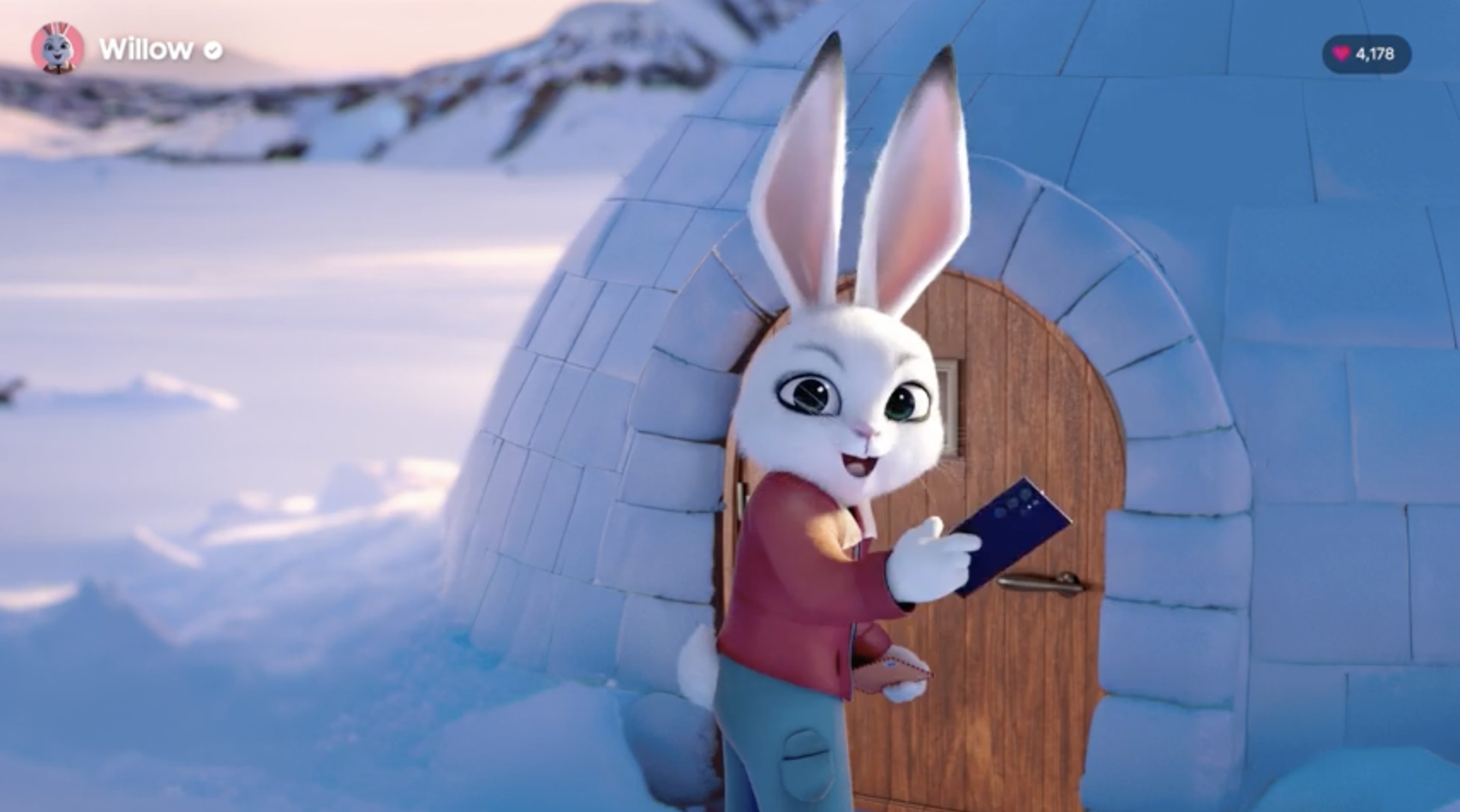
Handling a phone, opening a package or leaning on a product is more demanding than standing beside it. Contact points must remain convincing throughout the action. The viewer may notice a sliding hand or intersecting finger even when the character is deliberately stylised.
Provide the production team with the correct product model or dimensions, approved packaging artwork and any restrictions on how the object can be shown. Confirm which version is final. If an industrial design or label changes after animation approval, the effect can extend into hand placement, framing, lighting and compositing.
Create a short interaction checklist for each shot: what touches what, when contact begins, whether the object changes hands and which details must remain readable. Test the hardest contact early. A simple grey model is often enough to discover that the mascot's fingers cannot reach around the pack or that its sleeves obscure the action.
When the character is placed into filmed footage, clarify tracking, camera information, lighting reference and responsibility for compositing. For a fully animated environment, agree the scene design and product presentation instead. These are different production arrangements, even if the finished advertisement appears similar to the viewer.
A published example: Willow for Samsung
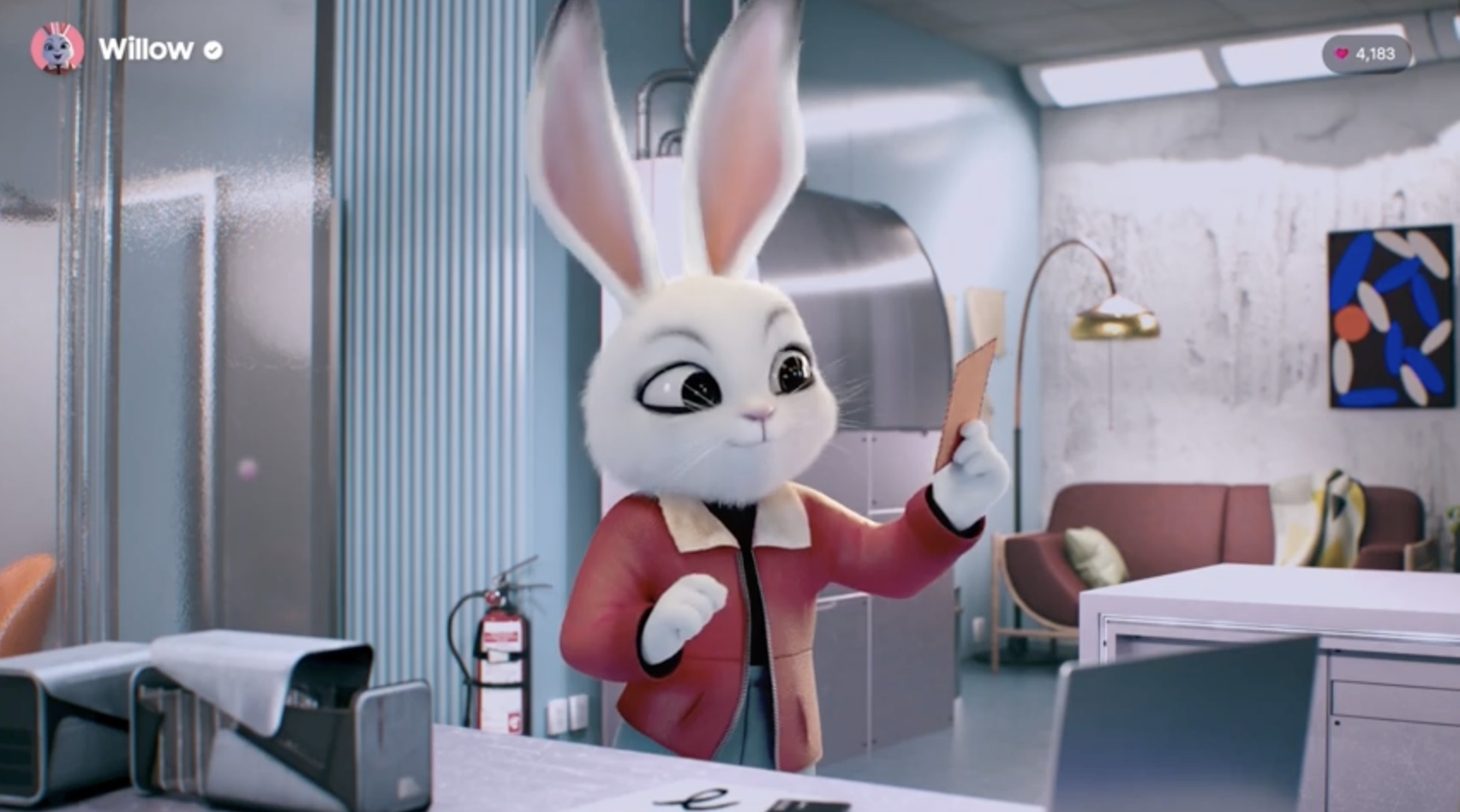
The Samsung Willow project is a useful example of a stylised advertising character with fur, clothing and expressive gestures. Mimic Productions' published project record identifies Kingdom of Something as the client for the 2023 commercial and lists character creation, modelling, grooming, keyframe animation, look development and rendering.
The record describes refinements to body fur, whiskers and the jacket collar, alongside attention to ear translucency and gesture timing. It also identifies fixes involving campaign props. These details show why appearance, rig behaviour and shot performance need to be reviewed together. They do not establish that Willow was commissioned as Samsung's permanent brand mascot, and we do not make that claim here.
For a new campaign, the relevant question is which comparable production decisions apply to your character. A smooth graphic mascot may not need a groom. A furry one may need early tests around the face and clothing. Our creature grooming and fur service covers that specialist scope when it is relevant.
The project record is evidence of the named contribution, not a promise that every mascot follows the same schedule or technical setup. Any new brief should establish its own files, review stages and delivery requirements. The published Mimic Productions project details are the source for this example.
Plan campaign formats before final animation
One approved widescreen film does not automatically become an effective vertical advertisement. The mascot, product and message may compete for a much narrower frame. Plan the important compositions in every required aspect ratio before camera and animation approval, especially when hands, ears or a tail carry the action.
Build a deliverables list with duration, aspect ratio, resolution, frame rate, language, audio version and destination for each output. Distinguish a reframed version from a new edit or a new performance. A six-second cutdown may need different timing rather than simply removing the beginning and end of a longer film.
If dialogue will be localised, confirm whether lip sync changes for each language and when voice recordings will be locked. Allow space for captions and required legal copy where those are part of the campaign. Test the product and facial expression at a realistic phone viewing size, not only on the studio's large review screen.
Clarify whether delivery includes finished renders, compositing passes, transparent-background clips, still poses or editable source assets. None should be assumed to include the others. A pipeline handoff checklist helps identify dependencies such as software versions, plugins and texture locations before another team needs to use the files.
Control revisions, budget and long-term reuse
The main cost drivers are the asset's starting condition, visual complexity, performance range, shot count, rendering needs and number of versions. A supplied model may still require topology, rig or material work. Ask for a readiness assessment before assuming that an existing asset removes those production stages.
Set review gates for the design, model, look, rig tests, animation blocking and final output. Describe what each gate approves. If a later comment changes an approved design decision, the producer can explain which downstream work is affected. This makes scope changes visible while there is still time to choose a sensible response.
For a recurring mascot, request an agreed asset package and a record of approved behaviour. Useful items can include a pose library, material references, naming conventions and notes on expressions to avoid. Source-file access, permitted usage and third-party asset licences should be defined in the agreement; delivery of a video alone does not answer those questions.
Use the creature animation budget guide to organise cost questions, then ask for a quote against a defined scope. Avoid treating a per-second rate as the whole budget: building the reusable character and producing each campaign shot are different pieces of work.
3D mascot animation FAQs
A mascot may already exist as a drawing, a costume or a familiar face on packaging. Bringing it into a commercial introduces decisions that a still illustration never had to answer. How does it turn? What happens when it smiles? Can its hands hold the product without changing the silhouette people recognise?
This guide is for brand teams, agencies and producers planning an animated campaign character. It focuses on the decisions that make a brief actionable, rather than repeating a general character-production tutorial. Our advertising creatures and brand mascots service explains the production scope available for a specific commission.
Table of Contents
Define the mascot's job in the campaign
Start with the audience's takeaway. Is the character demonstrating a product, delivering a joke, guiding a viewer through an unfamiliar feature or providing a recognisable sign-off? A single clear role helps the creative team decide how much acting, dialogue and physical interaction the asset needs.
Write three personality rules and three boundaries. A curious character might investigate an object before speaking; a reassuring character might use slower, deliberate gestures. Boundaries might include avoiding aggressive expressions, never looking clumsy with the product or keeping the character's behaviour appropriate for a particular audience. These are practical performance instructions, not just adjectives on a mood board.
Separate a recurring brand mascot from a character made for one campaign. Both can be memorable, but a long-term asset needs a broader pose library, consistent expressions and a maintenance plan. Do not commission every imaginable action at the start. Prioritise the launch requirements, then identify what should remain extendable for future campaigns.
Agree who approves brand identity, performance and technical delivery. One consolidated response from the client is easier to implement than contradictory notes from several reviewers. A short decision log should record what was approved and what remains open. The creature production brief guide provides a starting point for gathering that information.
Translate the approved design into three dimensions
A front-facing drawing leaves the side, back and volume of the character unresolved. Before detailed modelling, approve a simple three-dimensional turntable. Check the silhouette from the angles used in the campaign, including views that reveal the underside of a muzzle, the depth of the eyes or the attachment of ears and limbs.
Preserving the design does not always mean reproducing every line literally. A graphic cheek shape may need volume changes to read correctly from multiple angles. Make those choices deliberately, with side-by-side comparisons to the approved artwork. Record which features are fixed brand identifiers and which can change to support motion.
Materials also affect recognition. A flat printed colour will look different under warm light, reflections and shadow. Review the character in a neutral setup as well as the intended campaign environment. If brand colours are tightly controlled, agree the approval method and colour pipeline with the finishing team rather than promising identical pixels under every light.
Plan clothing, fur and accessories during creature modelling and texturing. They change the apparent body volume and may conceal important poses. A jacket collar that looks excellent in a still can collide with the jaw during speech; a tail may be lost behind a product pack. Test these relationships before final surface detail.
Build the expressions and actions the story needs
The rig is the control system animators use to pose the character. Its scope should follow the storyboard and performance requirements. A mascot that waves and looks at a logo needs a different expression range from one delivering dialogue, running, handling props and interacting with other characters.
Ask for an expression review that includes the actual emotional beats of the campaign. Useful tests might include curiosity, recognition, hesitation and satisfaction, with transitions between them. Extreme poses can reveal technical weaknesses, but approval should also cover the subtle expressions audiences will see most often.
Eyes, eyelids, mouth corners, ears and the head silhouette need to work together. On a non-human face, copying human controls without considering anatomy can produce an expression that feels disconnected from the design. Define whether the character speaks, vocalises or communicates entirely through body language before planning creature facial rigging.
Review animation first in a simple blocking pass. Confirm the idea, timing and gaze direction before adding secondary motion or expensive rendering. A polished shot can still communicate the wrong intention. The rigging and animation service can be scoped around the performance tests and final shot list rather than an undefined promise of unlimited movement.
Treat product interaction as part of the brief
Handling a phone, opening a package or leaning on a product is more demanding than standing beside it. Contact points must remain convincing throughout the action. The viewer may notice a sliding hand or intersecting finger even when the character is deliberately stylised.
Provide the production team with the correct product model or dimensions, approved packaging artwork and any restrictions on how the object can be shown. Confirm which version is final. If an industrial design or label changes after animation approval, the effect can extend into hand placement, framing, lighting and compositing.
Create a short interaction checklist for each shot: what touches what, when contact begins, whether the object changes hands and which details must remain readable. Test the hardest contact early. A simple grey model is often enough to discover that the mascot's fingers cannot reach around the pack or that its sleeves obscure the action.
When the character is placed into filmed footage, clarify tracking, camera information, lighting reference and responsibility for compositing. For a fully animated environment, agree the scene design and product presentation instead. These are different production arrangements, even if the finished advertisement appears similar to the viewer.
A published example: Willow for Samsung
The Samsung Willow project is a useful example of a stylised advertising character with fur, clothing and expressive gestures. Mimic Productions' published project record identifies Kingdom of Something as the client for the 2023 commercial and lists character creation, modelling, grooming, keyframe animation, look development and rendering.
The record describes refinements to body fur, whiskers and the jacket collar, alongside attention to ear translucency and gesture timing. It also identifies fixes involving campaign props. These details show why appearance, rig behaviour and shot performance need to be reviewed together. They do not establish that Willow was commissioned as Samsung's permanent brand mascot, and we do not make that claim here.
For a new campaign, the relevant question is which comparable production decisions apply to your character. A smooth graphic mascot may not need a groom. A furry one may need early tests around the face and clothing. Our creature grooming and fur service covers that specialist scope when it is relevant.
The project record is evidence of the named contribution, not a promise that every mascot follows the same schedule or technical setup. Any new brief should establish its own files, review stages and delivery requirements. The published Mimic Productions project details are the source for this example.
Plan campaign formats before final animation
One approved widescreen film does not automatically become an effective vertical advertisement. The mascot, product and message may compete for a much narrower frame. Plan the important compositions in every required aspect ratio before camera and animation approval, especially when hands, ears or a tail carry the action.
Build a deliverables list with duration, aspect ratio, resolution, frame rate, language, audio version and destination for each output. Distinguish a reframed version from a new edit or a new performance. A six-second cutdown may need different timing rather than simply removing the beginning and end of a longer film.
If dialogue will be localised, confirm whether lip sync changes for each language and when voice recordings will be locked. Allow space for captions and required legal copy where those are part of the campaign. Test the product and facial expression at a realistic phone viewing size, not only on the studio's large review screen.
Clarify whether delivery includes finished renders, compositing passes, transparent-background clips, still poses or editable source assets. None should be assumed to include the others. A pipeline handoff checklist helps identify dependencies such as software versions, plugins and texture locations before another team needs to use the files.
Control revisions, budget and long-term reuse
The main cost drivers are the asset's starting condition, visual complexity, performance range, shot count, rendering needs and number of versions. A supplied model may still require topology, rig or material work. Ask for a readiness assessment before assuming that an existing asset removes those production stages.
Set review gates for the design, model, look, rig tests, animation blocking and final output. Describe what each gate approves. If a later comment changes an approved design decision, the producer can explain which downstream work is affected. This makes scope changes visible while there is still time to choose a sensible response.
For a recurring mascot, request an agreed asset package and a record of approved behaviour. Useful items can include a pose library, material references, naming conventions and notes on expressions to avoid. Source-file access, permitted usage and third-party asset licences should be defined in the agreement; delivery of a video alone does not answer those questions.
Use the creature animation budget guide to organise cost questions, then ask for a quote against a defined scope. Avoid treating a per-second rate as the whole budget: building the reusable character and producing each campaign shot are different pieces of work.
3D mascot animation FAQs
Can an existing 2D mascot become a 3D character?
Yes, but the design needs decisions about depth, unseen angles and movement. Approve a simple three-dimensional version before committing to detailed modelling. The goal is to retain recognisable brand features while making the character work from the required cameras.
Do we need to redesign our brand character?
Not necessarily. Some designs translate with small adjustments; others need more development around the eyes, mouth or proportions. Agree those changes with the brand owner and document the approved version before rigging and animation begin.
What should we send for an initial quote?
Send the approved artwork, campaign concept, intended actions, formats, approximate shot list, deadline and decision-makers. Include any existing model or rig and the permissions to use it. State whether you need final films, source assets or both.
Can the mascot speak in several languages?
It can be planned for that, but dialogue, facial controls and localised animation must be included in scope. Different recordings may require different timing or mouth shapes. Confirm the languages and approval process before production schedules are fixed.
Is fur necessary for a premium-looking mascot?
No. A clear design and convincing performance matter more than adding a particular surface treatment. Fur is appropriate when it supports the approved character. Smooth, graphic or sculpted materials can be equally intentional, with different production requirements.
Can one mascot asset be reused across campaigns?
Potentially, if the delivered asset, software dependencies and usage agreement support it. Future actions may still require rig changes, new costumes or additional expressions. Define the intended reuse rather than assuming that every future campaign is covered by the first commission.
Does a rendered mascot work automatically in games or XR?
No. Interactive delivery introduces real-time rendering, asset budgets, runtime behaviour and integration requirements. The design may be reusable, but its model, materials, groom and rig need assessment for the target platform before a conversion is promised.
How should we approve the finished work?
Review it against the agreed shot list, brand rules and delivery specifications. Check performance, product visibility, contact, framing, text-safe areas and all requested versions. Confirm that the receiving team can open any contracted source files and reproduce the intended result.
Prepare a mascot brief that production can act on
A useful brief makes the character's role, performance and delivery clear. It lets the team test the difficult decisions early: translating the design, preserving expressions, handling products and composing each campaign format. The result is a better basis for a schedule and quote than a request to simply make the character move.
Planning a mascot campaign? Share your character, campaign formats and deadline with Mimic Creatures. Include the actions that matter most and tell us which assets already exist, so the production discussion can start with the work your campaign actually needs.


Comments