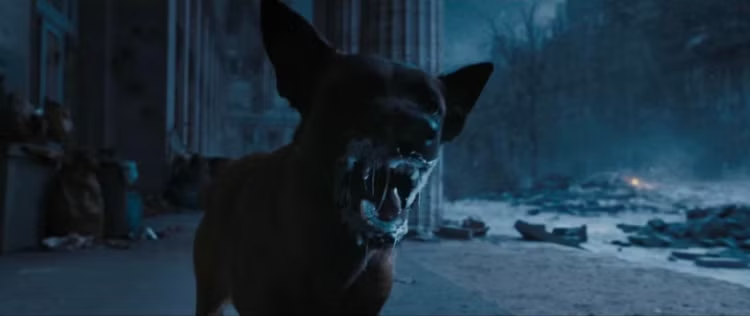
Creature facial rigging gives animators control over non-human expressions. We scope facial poses, blendshapes, joint behaviour and animator controls around the creature’s anatomy and the performance it needs to deliver.
A muzzle, beak or unusual jaw changes the way an expression must be built. Copying a human facial control list is not enough to establish believable non-human movement. The production needs a shared expression range: what the character can communicate, whether it speaks and which close-ups will expose deformation. Body rigging and facial work can be commissioned together, but their acceptance tests should be explicit.
A facial system with a purpose.
01
Expression and pose planning
Define the neutral face and an approved set of expressions before building a large shape library. Include eye direction, blinks, jaw opening and any muzzle, cheek or ear behaviour that matters to the performance. Keep optional expressions separate from the essential shot or gameplay requirements.
02
Topology and shape development
Assess whether the model supports the required facial movement. Plan blendshapes, joints and corrective work around the anatomy rather than assuming one technique fits every region. Large changes to the head after shape approval can invalidate dependent work and should trigger a scope review.
03
Animator controls and combinations
Organise controls around the actions animators need to perform. Test combinations, such as an open jaw with a smile or a blink with eye movement, instead of approving each shape only in isolation. Clarify how facial controls interact with ears, whiskers, teeth and the body rig.
04
Speech and destination requirements
If the creature speaks, supply dialogue and the intended expression style. Define lip-sync requirements for its mouth anatomy and agree how poses are transferred to the target pipeline. Capture retargeting, runtime control logic and final animation are separate tasks unless they are included in scope.
Test expressions. Not just sliders.
Approve the pose sheet
Review the emotional range and speaking requirements against the story or gameplay. Identify extreme expressions before building the system.
Check the model
Review topology, mouth interior, eye placement and attachments. Resolve structural limitations before polishing facial controls.
Combine the poses
Test extremes, asymmetry and transitions. Look for eyelid gaps, intersecting teeth, collapsing cheeks and unexpected movement.
Hand over a review scene
Provide the agreed rig or shapes with representative poses and usage notes. Verify supported versions and export behaviour with the receiving team.
Related work / Mimic Productions
Performance shaped around the character.
For the canine performer Demeter in The Hunger Games: The Ballad of Songbirds & Snakes, Mimic Productions documented blendshape modelling for facial expressions and deformation. This supports the shape-development part of a facial workflow; the published scope does not specify a complete facial-control rig. Controls, shape counts and capture compatibility must be agreed for each new brief.
Approved head mesh, neutral pose and existing body rig
Expression references, dialogue and required close-ups
Eye, mouth, ear, whisker and groom dependencies
Target software or engine and export constraints
Required source shapes, controls, test poses and review schedule
Production questions.
Do creature faces need human facial controls?
Only where they support the intended performance. A creature’s anatomy may require different poses and control relationships. Start with the expressions and actions the character must perform, then define the control system.
Are blendshapes the same as a complete facial rig?
No. Blendshapes describe shape changes. A complete facial setup may also include joints, controls, connections and corrective behaviour. The delivery should state whether it contains shapes alone or a working animator-facing system.
Can you add facial controls to an existing rig?
The team first reviews the model, rig architecture and software dependencies. Integration may be straightforward or may require topology and rig changes, particularly when the requested expressions exceed the existing setup.
Does facial rigging include lip-sync animation?
Not automatically. A speaking rig, a library of mouth poses and an animated dialogue performance are different deliverables. Provide sample dialogue and clarify whether the commission includes rigging, animation or both.