Concept & visual identity
Define anatomy, proportions and a silhouette that reads from the gameplay camera. Establish how the creature fits the world, and which features need to remain visible at a distance.
 DISCOVER THE WORK
Game creature design & animation
Creature design, modelling, rigging and animation for games. Give enemies, companions and world inhabitants a clear identity, readable movement and a defined path into your production.
Discuss your gameExplore the delivery scope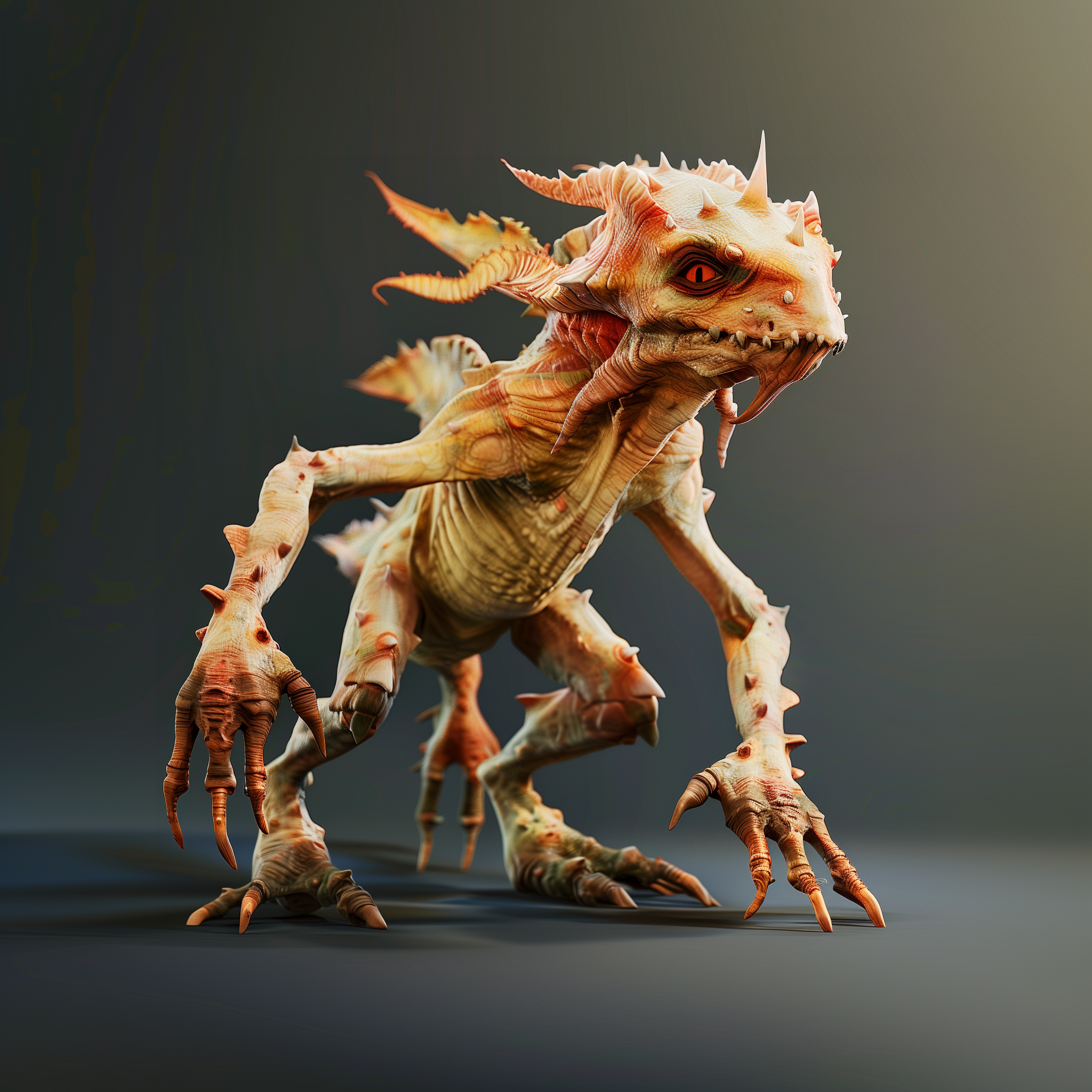
A creature’s shape and movement help a player understand what happens next. A hostile stance can signal danger; a companion’s glance can invite attention. We develop the asset around its role, camera distance and required actions, so visual decisions support the experience rather than compete with it.
Define anatomy, proportions and a silhouette that reads from the gameplay camera. Establish how the creature fits the world, and which features need to remain visible at a distance.
Build geometry, UVs and materials around the agreed platform and viewing conditions. Discuss mesh and texture budgets, material count and level-of-detail requirements before detailing the asset.
Plan controls and joint behaviour for the actions the game needs. Test deep poses, contacts and unusual anatomy early, including wings, tails or extra limbs where relevant.
Develop locomotion, idles, attacks, reactions and transitions from an agreed animation list. Review anticipation, timing and recovery so each action can be understood in context.
A useful animation brief describes behaviour as well as clip names. The first review should answer whether the movement works for the player.
Agree the creature’s behaviour, camera, visual references and priority actions with the game team.
Review representative poses and a small set of actions before expanding the rig or animation library.
Check scale, movement and readability using agreed gameplay reference or an engine review supplied by the team.
Check naming, versions, exports and dependencies against the handoff specification.
Agree units, orientation, skeleton conventions, supported file formats and source-file delivery. Define ownership of any engine-side setup before production.
Agree frame rate, clip boundaries, loops, root motion versus in-place movement and naming. Coordinate foot contacts and event timing with gameplay requirements.
The game team sets the target-platform budgets. Mesh, texture, bone and material requirements should be tested in the intended scene rather than judged from an isolated render.
Define who reviews the asset, how feedback is consolidated and what counts as an accepted delivery. Late changes to anatomy can affect the model, rig and animation set.
Bring a developed brief or an early creature idea. We can help identify the production stages and questions that need to be resolved.
Plan your creatureYes. Share the asset, software version and required actions. We review topology, deformation and export requirements before agreeing which parts can be retained and which need work.
Share the engine version, skeleton conventions, material setup and import requirements. Asset preparation and any engine-side testing are agreed in the scope; gameplay programming and full engine integration are separate responsibilities unless included.
The visual direction is defined around your game. Reference, silhouette and movement tests help establish a consistent style before detailed modelling or a larger animation set begins.
List the required actions, loop behaviour, transitions and variations. Include root-motion or in-place requirements, attack timing, contact points and any events the gameplay team needs to coordinate.
Scope depends on the number of creatures, visual complexity, model and rig readiness, animation count, variations and target-platform requirements. A priority list and representative references make the estimate more useful.
For an enemy creature, an idle, locomotion cycle and attack can expose important questions before the full set is built. Agree anticipation, contact, recovery and interruption rules with the gameplay team.
Discuss your gameplay requirementsFor a companion, the test may instead focus on following, turning and attention. These are illustrative brief examples; the final animation list should follow your own mechanics.
Send the gameplay camera, engine version, skeleton conventions, asset budgets and priority actions. Define who imports the assets and tests the transitions in the game.