.jpg)

Creature Design Mistakes to Avoid When Developing New Species
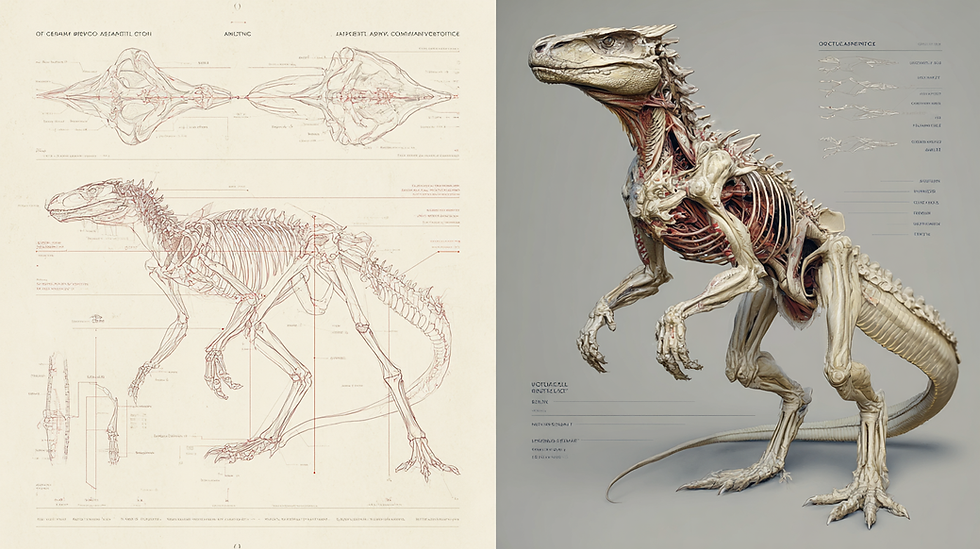
Creature design is one of the most creatively rewarding yet technically challenging aspects of worldbuilding. Whether for games, film, VR experiences, or immersive storytelling, creating new species requires balancing imagination with anatomical logic, believable motion, and emotional connection. Many designers fall into common traps that lead to creatures that look impressive in concept art but collapse during modeling, rigging, animation, or narrative integration.
As creature pipelines evolve to include AI-assisted generation and simulation-driven workflows like those featured in Mimic Creatures, it has become even more important for artists to avoid foundational mistakes early in development. The strength of your species depends on thoughtful decisions made long before the creature is animated or brought into a world.
This guide covers the most common creature design mistakes to avoid and how to create compelling, believable, and functional species for any project.
Table of Contents
What makes professional creature design challenging?
Creature design requires blending:
biological logic
motion functionality
personality
silhouette clarity
believability within the world
opportunities for animation
memorability
A creature cannot simply look good. It must work, move, and feel alive.
This requires collaboration between concept artists, modelers, riggers, and animators—reinforced by AI tools that accelerate ideation, as shown in AI-powered prototyping workflows.
Mistake 1: Ignoring functional anatomy
Many beginner designers focus on aesthetics over structure, resulting in creatures that fall apart once animated.
Common issues include:
limbs that cannot support body weight
joints that bend unnaturally
misplaced muscles
impossible center of gravity
no logic behind mobility
How to avoid it?
Study real-world anatomy—mammals, reptiles, insects, birds—and decide how your creature’s physiology works.
Ask:
How does it stand?
How does it breathe?
How does it hunt or feed?
How does it protect itself?
Function makes the creature believable.
Mistake 2: Designing creatures without considering motion
Creature design and motion design must evolve together.
A creature might look stylish in 2D, but:
cannot walk properly
cannot run without collapsing
wings are too small to support flight
tails are too stiff for balance
extra limbs serve no functional purpose
AI-assisted movement tools and animation-ready planning, like those used in motion development pipelines, help identify motion issues early.
Mistake 3: Overcomplicating the silhouette
A creature silhouette needs to be:
simple
readable
recognizable from distance
iconic
Overly detailed shapes may look interesting, but they:
distract from personality
confuse the eye
make animation difficult
reduce visual clarity in scenes
Great creature design often starts with a memorable silhouette first, then adds detail.
Mistake 4: Creating appendages that defy physics
Non-human species often feature:
long limbs
giant wings
oversized horns
multiple tails
extremely thick armor plates
These must follow real-world physics and weight distribution.
For example:
Huge wings must connect to strong chest muscles
Massive horns must have reinforced neck structure
Tentacles require flexibility and muscle control
Heavy armor slows movement realistically
Physics-aware design improves immersion and animation quality.

Mistake 5: Forgetting emotional readability
Even monstrous creatures require emotional clarity.
If audiences cannot read expressions or intention, they disconnect from the creature.
Designers often forget:
eyebrow equivalents
eye shape language
head tilt mechanics
posture-based emotion
musculature affecting expression
Emotional clarity helps with storytelling and animated performance.
Mistake 6: Inconsistent scale or proportion logic
Many designs look good alone but fail when placed next to characters or environments.
Issues include:
creatures too big for their world
proportions that break believability
inconsistent scaling between limbs
environmental interactions that don’t make sense
Designers should constantly compare their creature with:
human scale references
terrain
buildings
other species in the world
Scale determines storytelling and gameplay impact.
Mistake 7: Not designing for rigging and animation
If a creature cannot be rigged smoothly, animators suffer.
Common rigging problems include:
extra limbs with unclear joints
meshes that deform poorly
armor plates intersecting flesh
wings with no folding logic
Heavy rigging fixes slow production and increases cost.
Designers should collaborate early with riggers or use AI-based rig previews (like those referenced in earlier Mimic Creatures blogs).
Mistake 8: Weak environmental adaptation
Creatures must look like they belong to their environment.
Ask:
What climate shaped this creature?
What does it eat?
What predators or prey influence its evolution?
How does it camouflage or defend itself?
Environmental logic makes even fantastical creatures believable.
Mistake 9: Ignoring AI-assisted exploration tools
Many creators rely only on manual drawing.This slows iteration and limits imaginative combinations.
AI creature exploration allows for:
rapid shape testing
stylization expansion
hybrid creature experimentation
biome-based variations
Skipping these tools limits creative range and slows production pipeline.
Mistake 10: Lack of species-level worldbuilding
A great creature should feel connected to its species and story world.
Avoid creating creatures in isolation.
Instead, define:
evolutionary history
cultural significance
species behavior
survival traits
social structure
role in the world’s lore
This transforms a good creature into an unforgettable one.

Conclusion
Creature design is most successful when it balances imagination with physiology, motion, world logic, and emotional clarity. By avoiding common mistakes and using modern tools—including AI-assisted prototyping, animation testing, and iterative design workflows—studios can create memorable species that feel alive and functionally believable.
Mimic Creatures empowers teams with intelligent creature development systems that simplify rigging, style exploration, and motion testing, helping creators build worlds filled with compelling and functional species.
FAQs
1. What is the biggest mistake in creature design?
Neglecting functional anatomy which leads to unrealistic and unriggable creatures.
2. How important is silhouette in creature design?
Very. A strong silhouette makes the creature readable and iconic.
3. Should creatures always follow real biology?
Not strictly, but designs should include enough biological logic to feel believable.
4. Do AI tools help with creature design?
Yes. AI accelerates shape exploration and helps test anatomy concepts early.
5. What role does the environment play in creature design?
The environment shapes evolution, behavior, and physical features.
6. Why should rigging be considered early?
Early rig-friendly design prevents costly rework later in production.
7. How do designers ensure emotional readability?
By integrating expressive features like eye shape, posture, and subtle facial cues.


Comments